
For the second time in its history, NJPAC is commissioning a memorial amid a controversy that, for now, is bigger news than the artwork itself.
For those who don’t know, NJPAC is designing a memorial for 24 Rector Street, the site of the soon-to-be-demolished Cathedral House, a building NJPAC swore to protect in 1993. This memorial appears to be an attempt by NJPAC to repair its reputation when it comes to historic preservation and the treatment of black history sites.
Artist Nina Cooke John, who also designed the Tubman Monument, unveiled her design at the September Landmarks Commission meeting. It was only a courtesy review, meaning no vote was taken. But it was the public’s first chance to see the design direction.
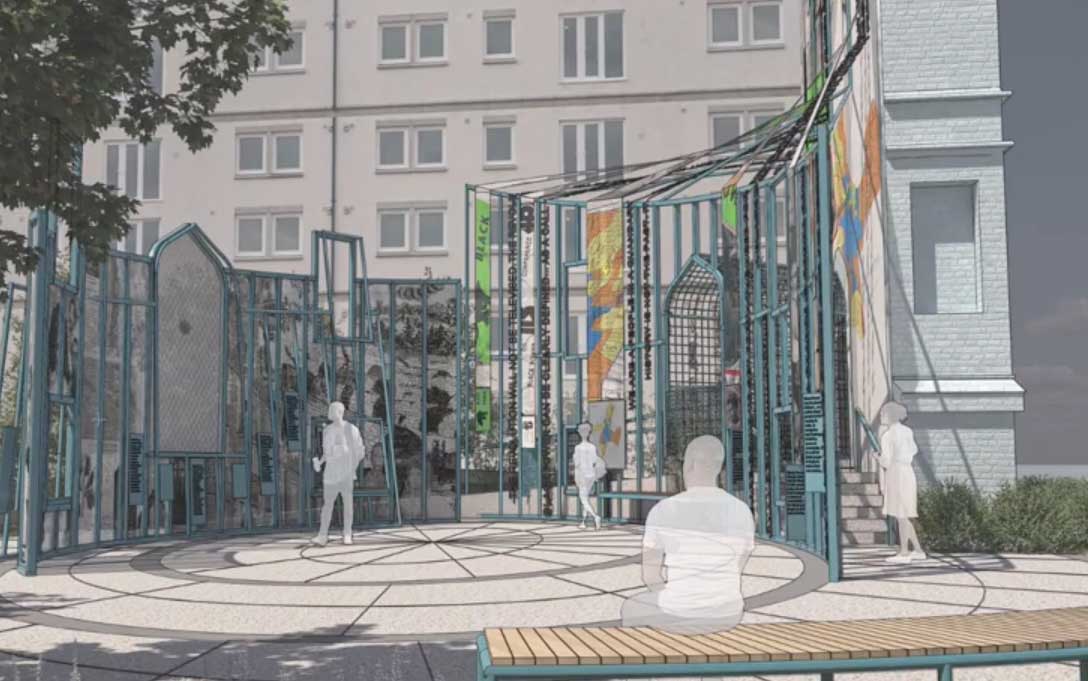
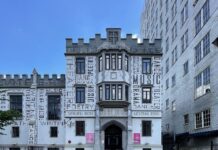
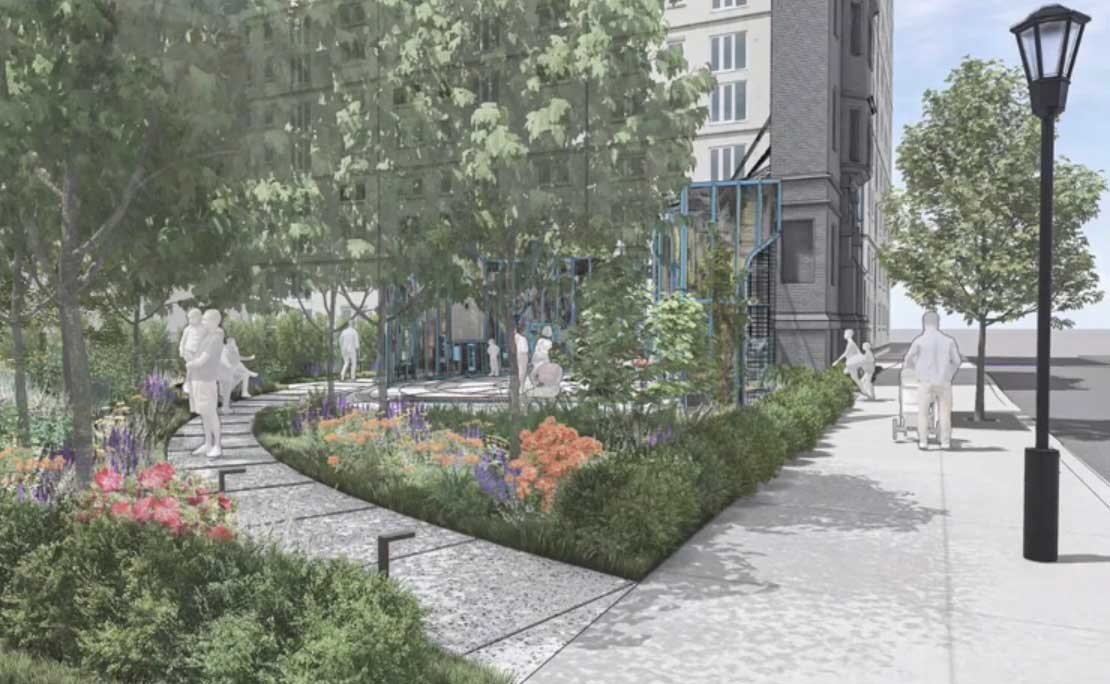
The monument includes part of the preserved Cathedral House facade, including Paula Scher’s famous supergraphics mural. The building’s original entrance will serve as a gateway into the park.
“We’re also proposing that you can move up the existing stairs because we heard from the community that this was a really important marker for entry into the building, so it is reflecting and holding on to that experience,” John said.
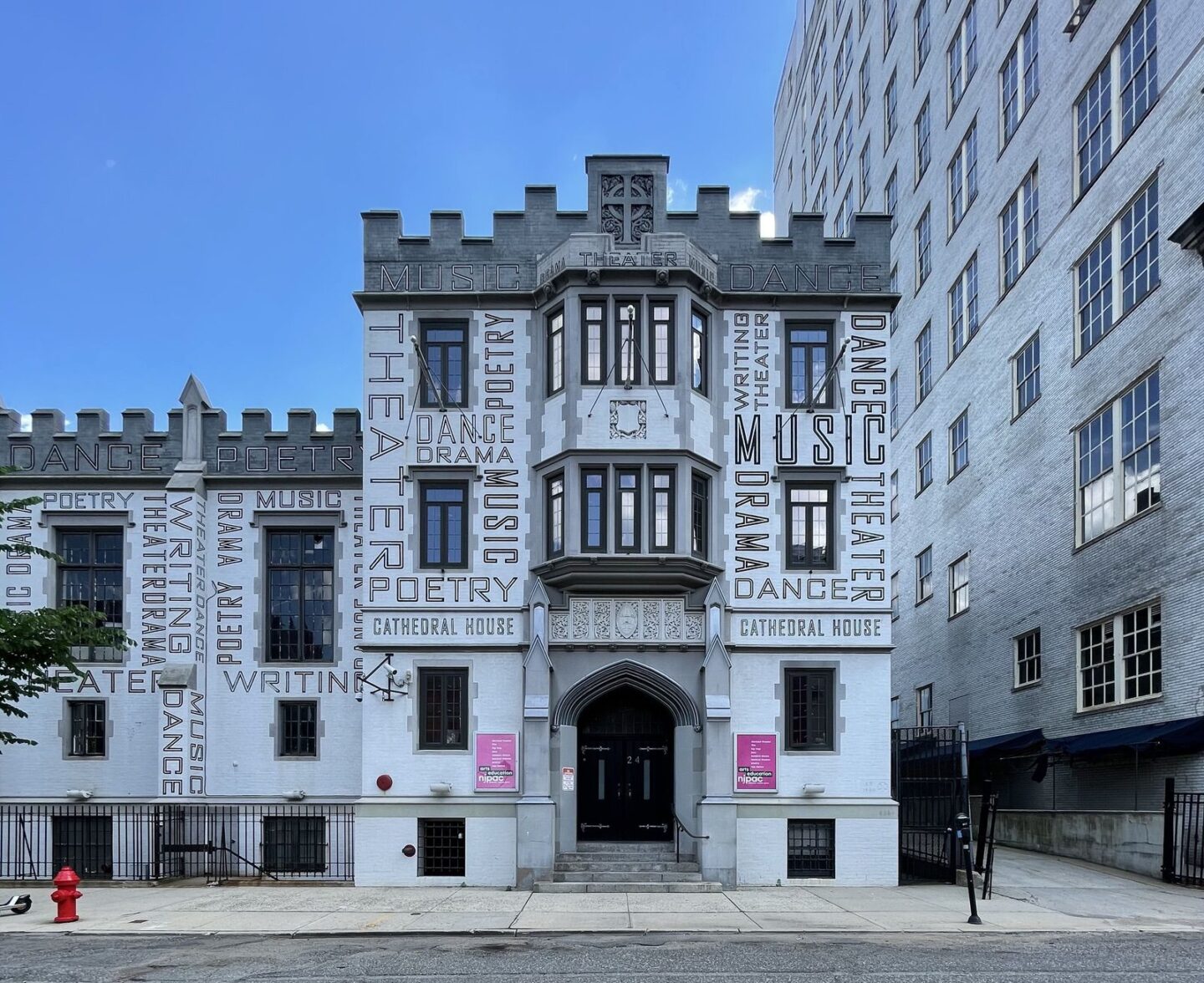
Behind the facade will be two curving walls, one with a fixed history exhibit, the other with rotating art, and a native-plant garden. “The oval creates a kind of gathering space for small gatherings, whether they’re educational or poetry reading,” John said.
Tim Lizura, executive vice president at NJPAC, said the memorial will be completed next year, in time for the 60th anniversary of the Black Power Conference held there. He also addressed preservationists’ concerns that this park, too, might someday be demolished, given the arts organization’s track record of broken promises.
“This is a forever park,” Lizura said.
Though the public couldn’t read the exhibition text, we at least know the new memorial will also include another memorial on NJPAC’s campus, one honoring the “African Burial Ground” that once stood here before the performance hall was built.
However, the burial ground was not solely for Black Newarkers, according to the late historian Clemente Price, who left behind several letters on the topic. Price called it a mixed-race burial ground, which was even rarer at the time.
That is why Price considered excavating the burial ground so important. He thought the site could become a tourist destination like the African Burial Ground National Monument in Manhattan. However, the excavation of the burial ground, including the remains of formerly enslaved Newarkers, was never completed because NJPAC said after beginning the work that it would have been too expensive to complete. The human remains were dumped into a landfill. A memorial was later constructed, but only after much hand-wringing from community members, and even then, it doesn’t mention everyone buried there.
”We can’t demolish this cemetery and only commemorate the 30 or 40 names of the people we took — we have to commemorate everything, the entire history,” said historian Myles Zhang at the September Landmarks Commission meeting. “I’d be horrified if I came back to my ancestors and realized they were put in a parking lot — we knew their names but their names weren’t printed on the memorial.”