
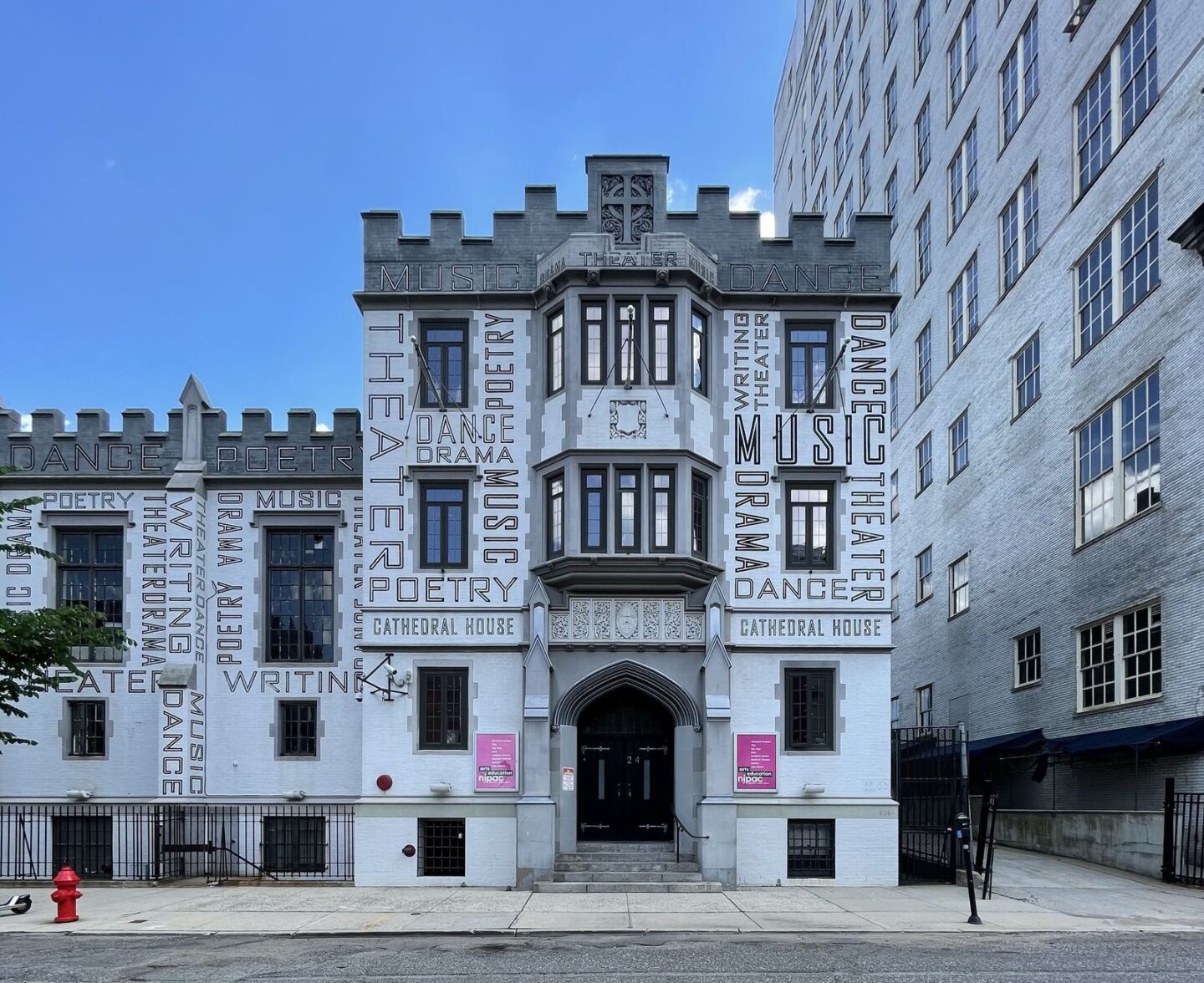
In a perfect world, Newark’s Landmarks Commission would comprise the city’s staunchest preservationists. But that has not been the case in the past year, and it is even less true since one of its commissioners, Myles Zhang, was ousted after voting against the demolition of NJPAC’s Cathedral House.
Zhang was not the chair of the commission, nor its longest-standing member, but he was one of the most qualified. The 30-year-old James Street native brought a doctorate in architectural history and a long record of fighting for the city’s most important landmarks. His appointment last year, at a time when the commission saw a major overhaul after the firing and resignation of the previous chair and vice chair, seemed like an act of goodwill from Mayor Ras Baraka. Zhang’s father, Zemin Zhang, was the former executive director of Newark Landmarks, a group that has been critical of the mayor on historic preservation.

After receiving a letter last month from Mayor Ras Baraka informing him of that his term would not be renewed, Zhang appeared at the September Landmarks Commission hearing as a member of the public to make an emotional appeal to the commission to deny the proposal to replace the Cathedral House with a monument.
“As you all know, I was removed from the Landmarks Commission because I voted against the demolition of the Cathedral House,” Zhang said. “I want to put that on the record here.”
“NJPAC wants you to say yes — they want you to vote yes and you’ve been appointed to this commission to vote yes on whatever application is presented,” he said. “Here is an opportunity to stand by principles and hold NJPAC accountable.”
Susan Garofalo, the city’s press secretary, said that although the termination letter was written on the mayor’s letterhead, the decision not to renew Zhang’s term didn’t come from Baraka, but instead came at the behest of Landmarks Commission chair Anthony Smith and was unrelated to Zhang’s vote on the Cathedral House.
“Zhang’s term was not renewed because the chairman of the commission had many people interested in that position and he selected the best resumes for a pool of candidates qualified to take Zhang’s place,” Garofalo said. “It was not the mayor’s decision and it had ‘zero’ to do with Zhang’s vote on the Cathedral House.”
The application to demolish the Cathedral House — NJPAC’s fourth attempt to demolish the building since 2021 —seemed to propose an interesting dilemma. NJPAC claimed that mitigating asbestos would imperil their ongoing construction project. Could approving the demolition of one of the city’s landmarks be worth it if it leads to a large real-estate project?
While that may be an interesting question for another land-use board, Zhang argued that this question was not an appropriate one for the Landmarks Commission, where the law spells out the acceptable criteria for approving demolition, Zhang said.
“I don’t know of any time in the past track record of this commission when this commission has approved a building for demolition because of allegations of asbestos,” he said. “That is not one of the acceptable criteria that is laid out in the municipal land-use law.”
Zhang joins a special group of former Landmarks Commission members who were relieved of their duties for what was claimed was upholding the ordinance. In 2024, Baraka forced longtime chair Partyka to resign after he refused to approve a pedestrian bridge project. The reason Partyka gave at the time was not that he didn’t want the project to move forward but that because the city’s presentation was only a courtesy review, he couldn’t bring the application to a vote, and therefore couldn’t issue a letter on behalf of the commission. Like Zhang, Partyka argued he was merely following protocol.
Partyka’s vice chair at the time, Susana Holguin-Veras, resigned in solidarity with Partyka. In 2006, Mayor Sharpe James fired Liz Del Tufo for not approving a demolition in Forest Hill.
Zhang’s remarks certainly voiced the frustrations preservationists have had with NJPAC and the city government. The Landmarks Commission, they argue, exists for no other reason than to protect the city’s designated historic buildings — that is the commission’s sole sworn duty. For that reason, its credibility relies not on approvals but on its denials. This current iteration of the Landmarks Commission has not yet proven it is willing to deny a demolition—three such applications have come before it, and all have been approved.
It’s a difficult responsibility in a city like Newark, where a tangled web of city officials and commissioners sits on the boards of the largest arts organizations, like Symphony Hall and NJPAC. As anyone knows who works in real estate, government, and the arts, getting large projects done can sometimes hinge on relationships.
It’s unfortunate that the design of a new city monument, which should be cause for celebration, is once again mired in controversy over how city government and NJPAC treat history.