
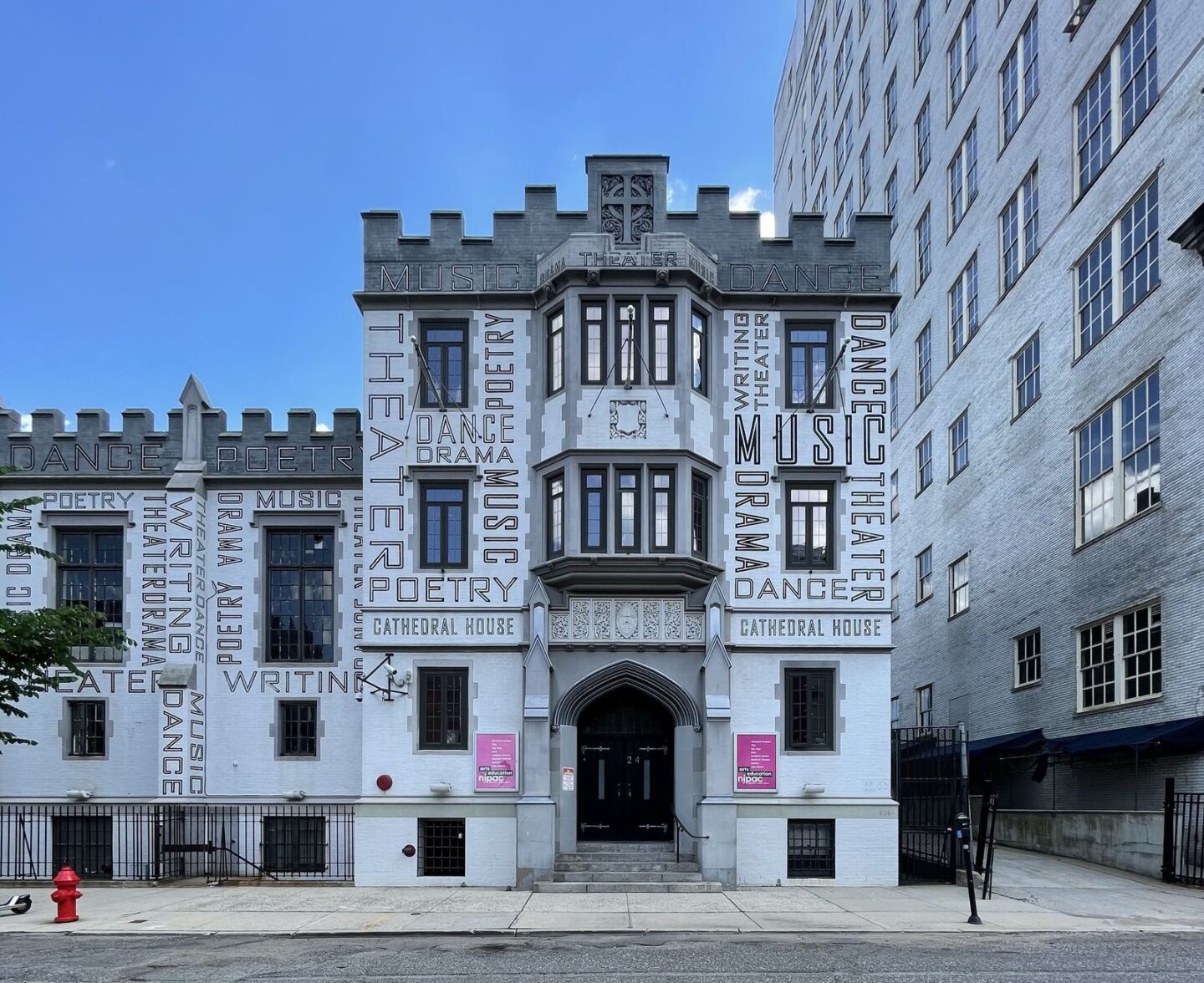
NJPAC finally revealed the reason it intends to break a 32-year promise and demolish the Cathedral House — asbestos.
This was the testimony of a remediation expert that NJPAC had hired and brought to the last meeting of the city’s Landmarks Commission, which reviews applications for demolition of designated landmarks.
Mark Constantino, manager at Whitman, the company that authored the asbestos report, said his firm was initially hired in 2022 to conduct an asbestos inspection, but because the building was occupied at the time, it was limited in its investigation.
In 2022, NJPAC agreed to demolish only the rear portion of the building following significant public backlash. The asbestos was discovered during the demolition of the rear portion, Constantino said, and he believes removing the asbestos could “compromise the structure.”
Myles Zhang, one of the commissioners, was skeptical of the report, given that asbestos is “common across historic districts” and is routinely remediated. “By my estimate, more than half the buildings in many historic districts have some asbestos or existing contamination,” Zhang said.
Zhang also mentioned that, even if the building were demolished, the asbestos would still have to be removed. He wondered whether the real factor underlying the demolition is a wish to save time and money. “So the avenue of demolition is $1.5-$1.6 million cheaper and about four months quicker,” Zhang said. “I question the timeliness of the report.”
The proposed demolition is part of a $300 million plan to update NJPAC’s campus, which includes the construction of the new $70 million Cooperman Center, where the arts education programs previously housed at the Cathedral House will be moved.
Overarching these demolition plans is a 1993 promise by NJPAC to the State Historic Preservation Office to protect the Cathedral House and the Chancery Building. This agreement was made in exchange for permission to demolish the Military Park Hotel and to build a performance hall on the site of the former Trinity Church Cemetery.
Nicaury Miller, Landmarks Commission vice chair, said that past broken promises make it difficult for her to believe the current promises will be kept.
“There is an old saying, ‘If you didn’t do it before, you’re not going to do it now,” Miller said. “I just don’t feel that, personally, the behavior shown in the past is going to be any different in the future.”
In 1967, the Cathedral House hosted the National Black Power Convention, held the same year as the city’s infamous riots. Junius Williams, who said he attended the conference in 1967, said organizer Nathan Wright believed it was “important that we talk about what just happened and what Black people want under the umbrella of Black power.”
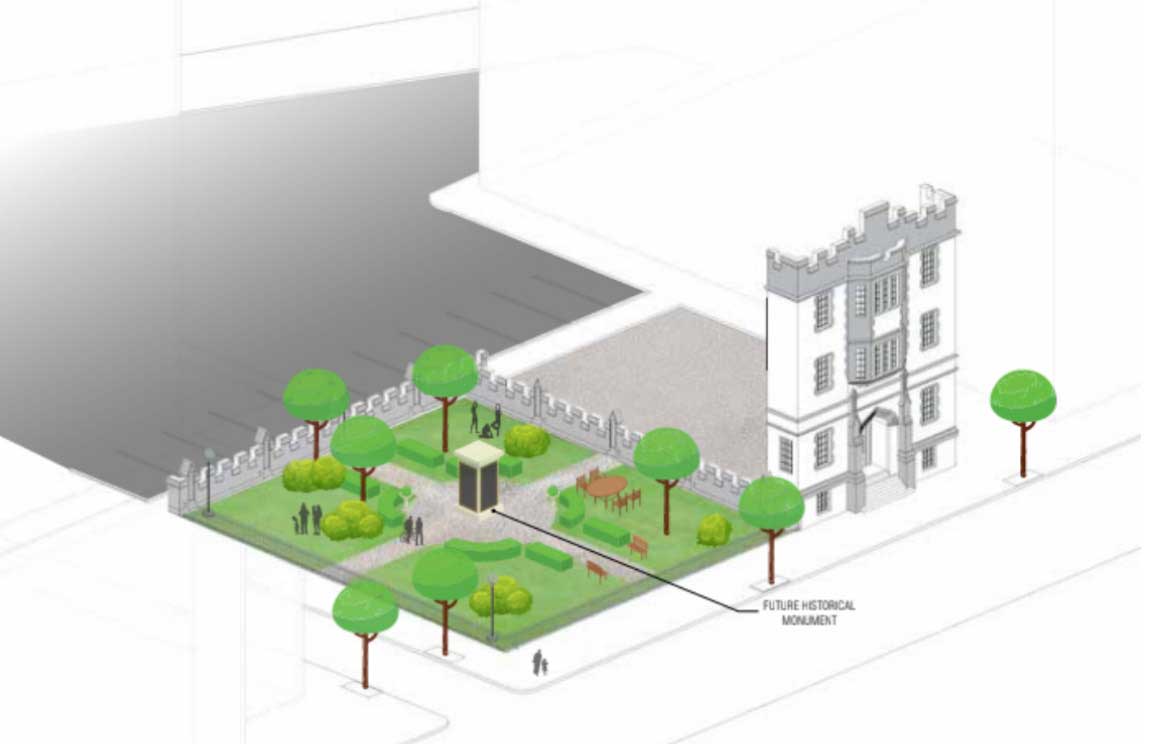
Despite the meeting taking place online, Williams appeared in the same room as John Schreiber, president and CEO of NJPAC, making a strong statement about their relationship before endorsing the demolition and the construction of a “living memorial” in its place.
“With this planned park and living memorial that we intend to put there, people can interact and learn a lot more than they would just looking at that building,” Williams said.
His claim — that a park would be a better way to commemorate the history of the building than the building itself — was repeated by three other commissioners: Rebecca Jampol, Linda Caldwell Epps, and the chair, Anthony Smith.
“It doesn’t take a building to keep a memory alive or to commemorate the lives that were lost or to remember the speeches that were made,” Caldwell Epps said.
It is unusual to hear that opinion coming from members of the Landmarks Commission, whose sole purpose is to protect historic landmarks from demolition. Vice Chair Miller made a point to remind her colleagues about the responsibility of the commission laid out in the local ordinance passed in the 1990s.
“The reason I joined this commission — the purpose of this commission — is to review buildings that are in a historical area of Newark. And this particular building is a contributing building,” Miller said. “For us to look at it as something other than that is beyond the scope of our commission.”
It is also concerning that this opinion is coming from two commissioners who admitted having conflicts of interest with NJPAC and would abstain from voting. Smith appears to have worked for NJPAC in the past, though he indicated he wouldn’t abstain from voting. The demolition will require five yes votes.
Miller requested that the meeting be adjourned until January, which would give the commissioners the opportunity to tour the building.