
A condo association is looking to void approvals for an adaptive use and expansion hotel plan claiming the zoning board failed to adequately consider a variety of detriments to both their building and the neighborhood.
On August 28, The Saffron Condominium Association filed suit to block a project at 201 Newark Avenue known as The Albion. Formerly a Capital One Bank branch, the development was approved back in April after several months of debate.
The endeavor comes courtesy of Landmark Hospitality, who own a variety of other high-end hospitality venues in New Jersey including Jersey City venues Liberty House, Hudson House, and The View at Lincoln Park.
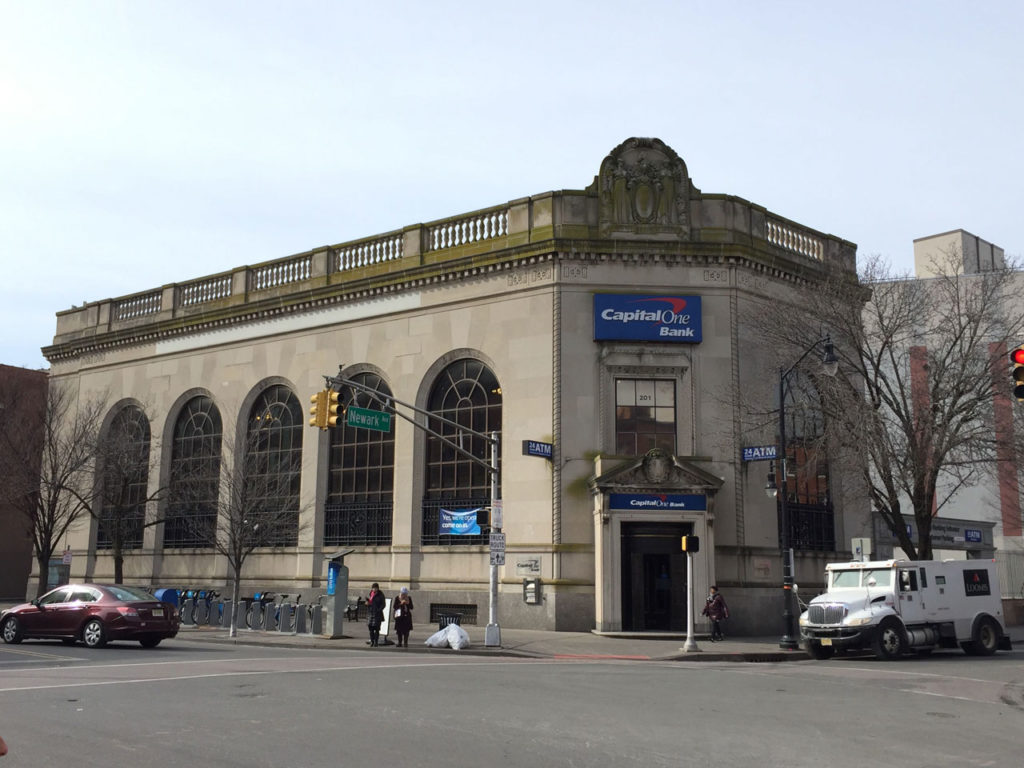
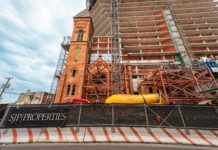
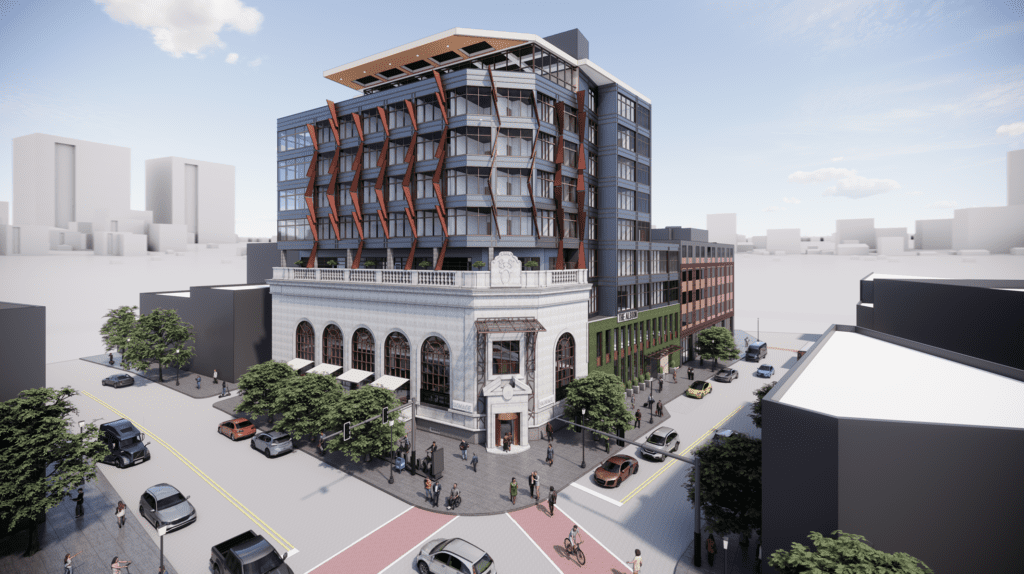
The current building at the site, first constructed in the 1930s by the Trust Company of New Jersey, will remain and be expanded under the approved plan. A nine-story addition to rise nearly 120 feet tall is a cornerstone of the project, which will include 72 hotel rooms, a two-story Asian-inspired restaurant on the ground floor, a founder’s suite, and numerous amenities such as a recording studio, a Peloton studio, and a rooftop with a bar and pool.
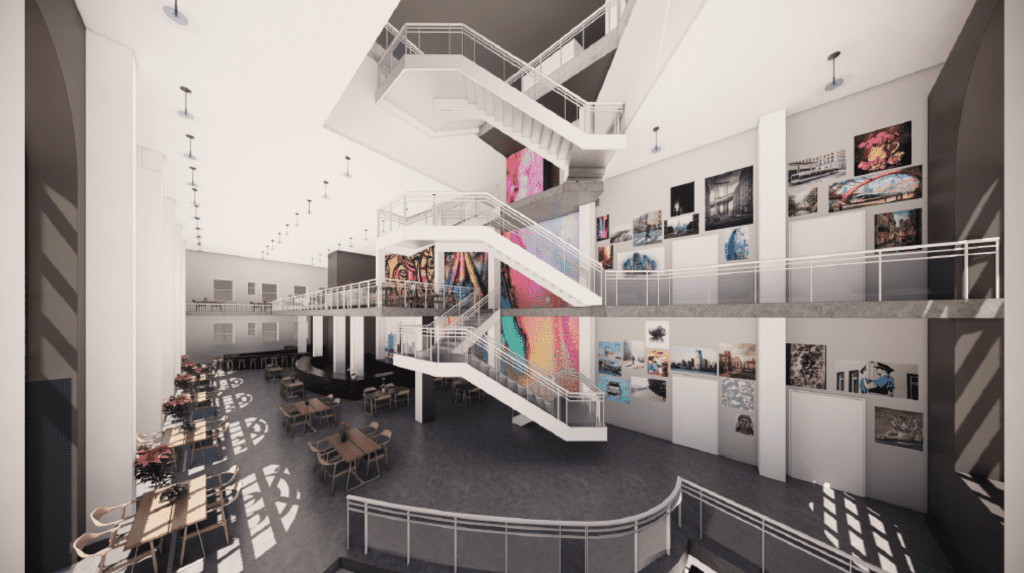
The project’s application was granted seven total variances by Jersey City’s Zoning Board when approved, including a deviation for almost doubling the allowable height of 64 feet under current zoning. That’s the crux of the lawsuit filed by Saffron Condominium Association, a development situated just west of The Albion site.
The legal complaint cites Jersey City’s Master Plan when describing the residential scale of the neighborhood, which does not allow hotel uses under current regulations. The lawsuit goes as far to claim that the zoning is designed to discourage the area from being a “destination.”
“This area of Jersey City’s “Downtown,” to the west of its Midtown-Manhattan-like commercial district, resembles Hoboken and Greenwich Village, with the atmosphere of a much smaller hamlet, full of genuinely historic buildings and streets, as well as young families and children: an enclave within New Jersy’s largest city,” the complaint writes.
The complaint says that the area’s zoning “is a combination of small-scale “Residential” and “Neighborhood Commercial,” with the prevailing, old 65’ height maximum set as a zoning limit by ordinance, to preserve views, light, and quiet.” The case additionally notes that the Downtown Coalition of Neighborhood Associations, a group of six formally constituted Associations, formally opposed the application.
There is concern throughout the lawsuit claiming that the Zoning Board cared more about the business community than their own constituents.
“The chief error committed by the [Zoning] Board…was to weigh the severe local harms against a ‘greater good’ that the Project supposedly would confer upon Jersey City as a whole, in stimulating business and employment growth and helping turn the neighborhood-commercial zone into a city-wide commercial zone,” the lawsuit writes.
Some of the concerns raised in the lawsuit apply particularly to the residents of The Saffron. The complaint claims the building’s courtyard will be reduced to a “dark canyon” due to shadows from The Albion and argues that “the event center would completely obliterate the main view from the Saffron’s rooftop terrace, a common element enjoyed by everyone who lives there.”
Noise concerns and potential traffic issues were also cited as negative criteria in the lawsuit that the board allegedly failed to consider. The Saffron board claims the approvals granted to the hotel were “arbitrary, unreasonable, and capricious,” also arguing a public notice failed to mention a potential plan to shuttle guests from a nearby Marriott near the Grove Street PATH station.
The lawsuit could mean delays are ahead at the property, which has been vacant for about five years. Jersey Digs has reached out to Landmark Hospitality regarding comment the lawsuit and will update our article with any statement we receive about the litigation.