
The effort to save St. John’s Episcopal Church in Jersey City has lasted more than three decades. After the Newark Episcopal Diocese closed the struggling house of worship in 1994, two generations of preservationists have fought to wrest the church from the specter of demolition and collapse — with some of the fiercest proponents of saving this landmark passing away without much reassurance that it would be restored.
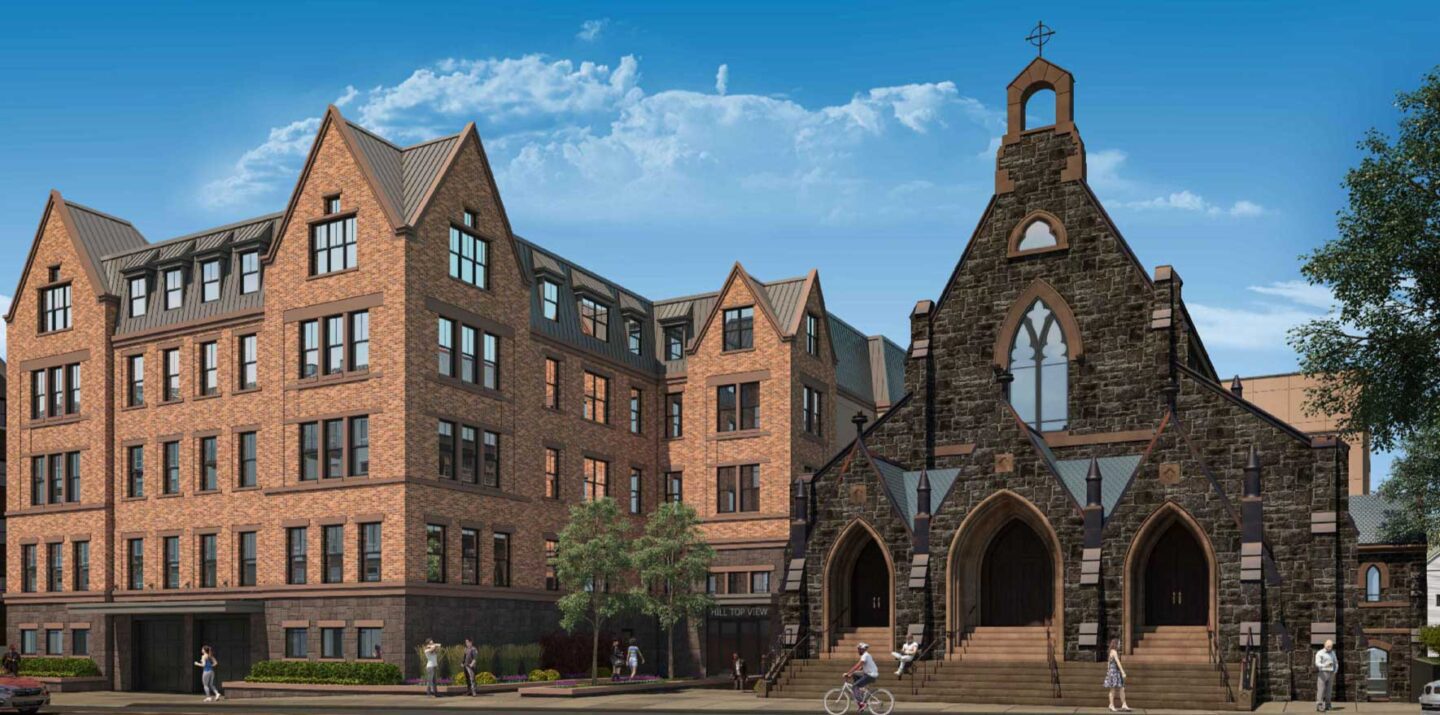
Certainly one of the most important milestones in this effort came earlier this month when a plan to restore the church — and build a multi-story apartment building beside it — won unanimous approval from the city’s Zoning Board.
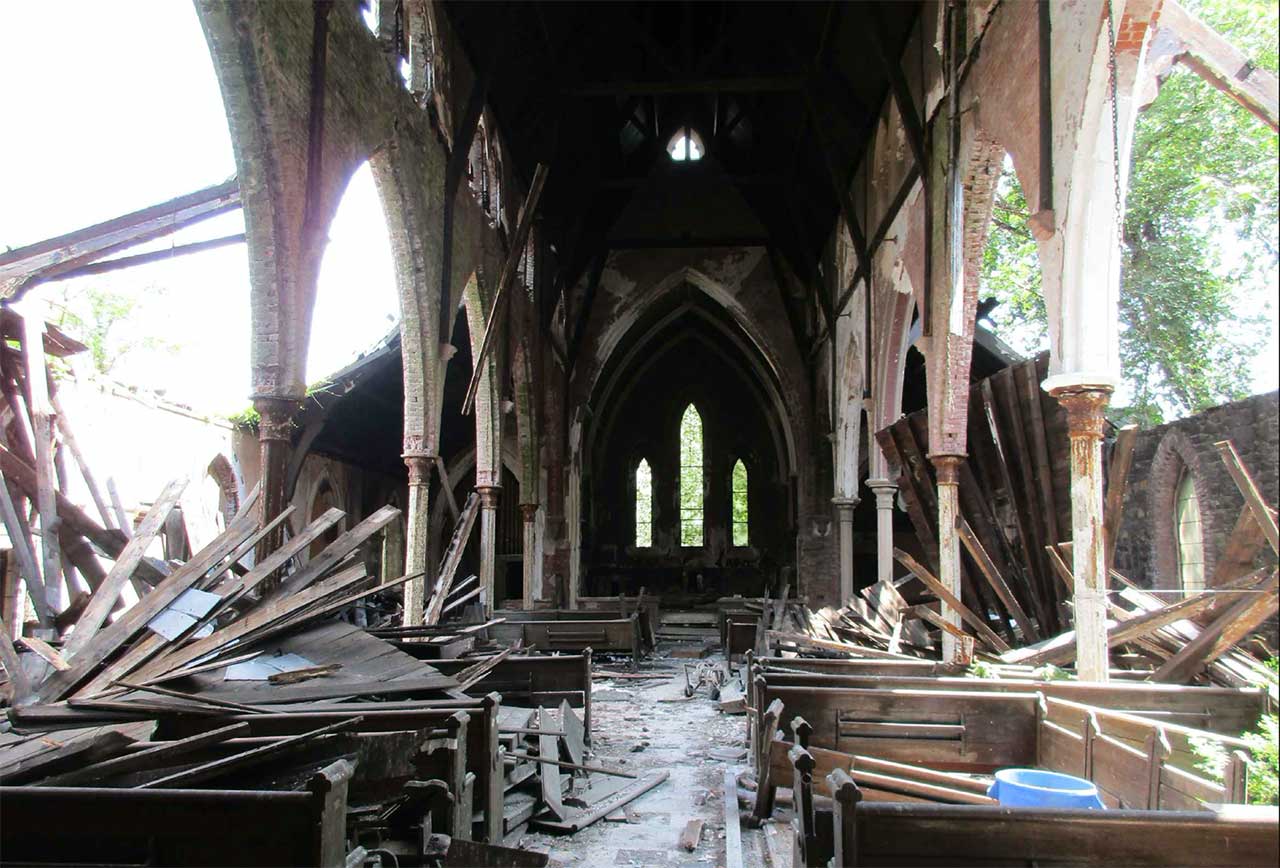
The plan to save it is impressive considering the state of disrepair the church is in — it is barely holding on despite lacking a roof and concerns about the structural stability.
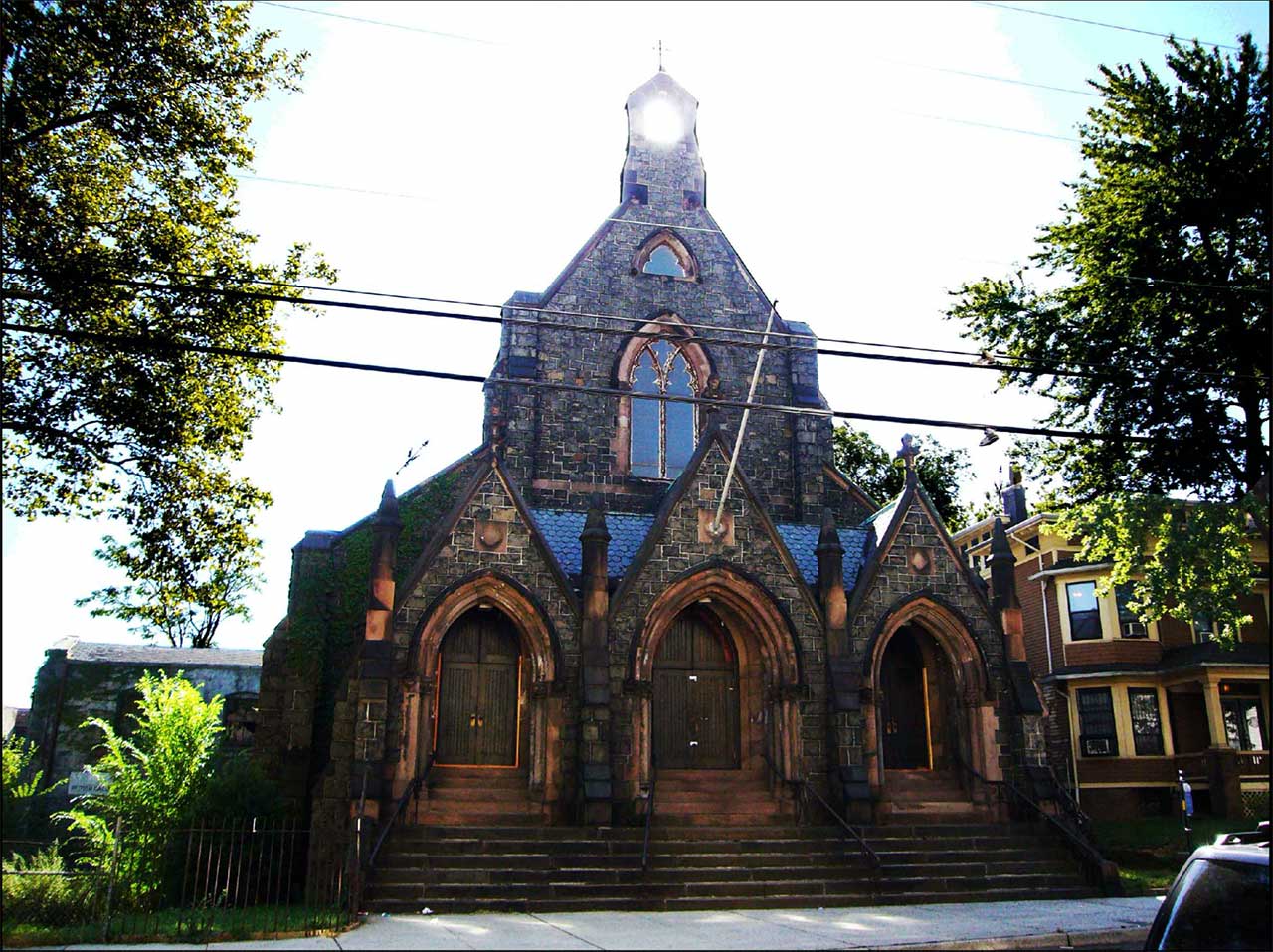
“Luckily these old buildings are so well built — even without the roof, the stone wall and iron beams have been holding it up,” said John Gomez, founder of the Jersey City Landmarks Conservancy.
Gomez once called St. John’s a “structural spectacle” in a three-part series he wrote in 2020 about the church for the Jersey Journal. The story was timely given that a developer, Ben LoPiccolo, had gained control that year of the property through the purchase and sale contract and was working on a plan to restore the church, just as Gomez’s newly founded organization began advocating for it.
“He always said to me that it’s going to happen to me and we just had to be patient,” Gomez said.
In 2021, LoPiccolo, chief executive officer of BLDG-UP, brought the application to the Zoning Board in 2021 and received approvals but the plan proved challenging to make feasible. In 2024, he teamed up with Simon Klepner, chief executive officer of Sky Developers NJ, who now has a controlling stake in the project.
“We have pretty extensive experience with historic fabric,” LoPiccolo said. “We thought we could bring that to this project and put humpty-dumpty back together again.”
The congregation has a long and fascinating history that spans more than just the Civil War-era parishioners who founded it. St. John’s was built in the mid-19th century, just as Bergen Hill was transforming from a Dutch farm town into a fashionable urban neighborhood. Built upon the Palisades, it was designed to resemble a French Gothic cathedral in Chartres, France, and it used to be the tallest landmark in the neighborhood. At the height of its membership, it was considered the state’s largest congregation.
The demographic of the church changed with the neighborhood. In the 1960s, there was a “resurgence” at the church from the city’s Black and Puerto Rican community. Under the leadership of one of the church’s last rectors, it became a hub of Civil Rights activism. The late Father Robert Castle — who became head of the church in 1960 when the congregation was “dying,” he once said — fought against racial discrimination, and even got arrested for protests. Castle was the subject of John Demme’s feature-length documentary “Cousin Bobby.”
In 2008, when local preservationists were fighting for the church to gain local landmark designation — the strongest protection a historic building can receive — Castle, then retired in Vermont, traveled to Jersey City to give an emotional appeal to the City Council. The church finally received landmark status until 2013, but Castle had died the year before.
“They were moved by his word and his presence,” Gomez said about Castle. “He was instrumental in saving his old parish.”
Not only did the church close, but shortly after suffered the indignity of having its most prized relics sold to salvage firms. Some even recall seeing the items hawked on eBay. Among the prized possessions were the Tiffany stained-glass windows, two of which Gomez discovered had made their way to the Driehaus Museum.
“I took a flight out to Chicago to see them,” Gomez said. “I couldn’t believe I was standing in front of windows that were in a building in Jersey City that I was trying to save.”