


If you speak to enough residents of Lambertville, you’ll begin hearing the same story about how they fell under its spell. Karla Feuer, who first visited in 1979, made it her life’s mission to move there. Careers and family obligations only delayed the inevitable. Eight years ago, she finally sold her Montclair home and moved to the small historic town along the Delaware River.
“My first job out of college was working as a reporter for the Hunterdon County Democrat,” said Feuer, who is now the publicist for the Lambertville Historical Society. “I would come through here and think, ‘Now that’s a cool town.’”
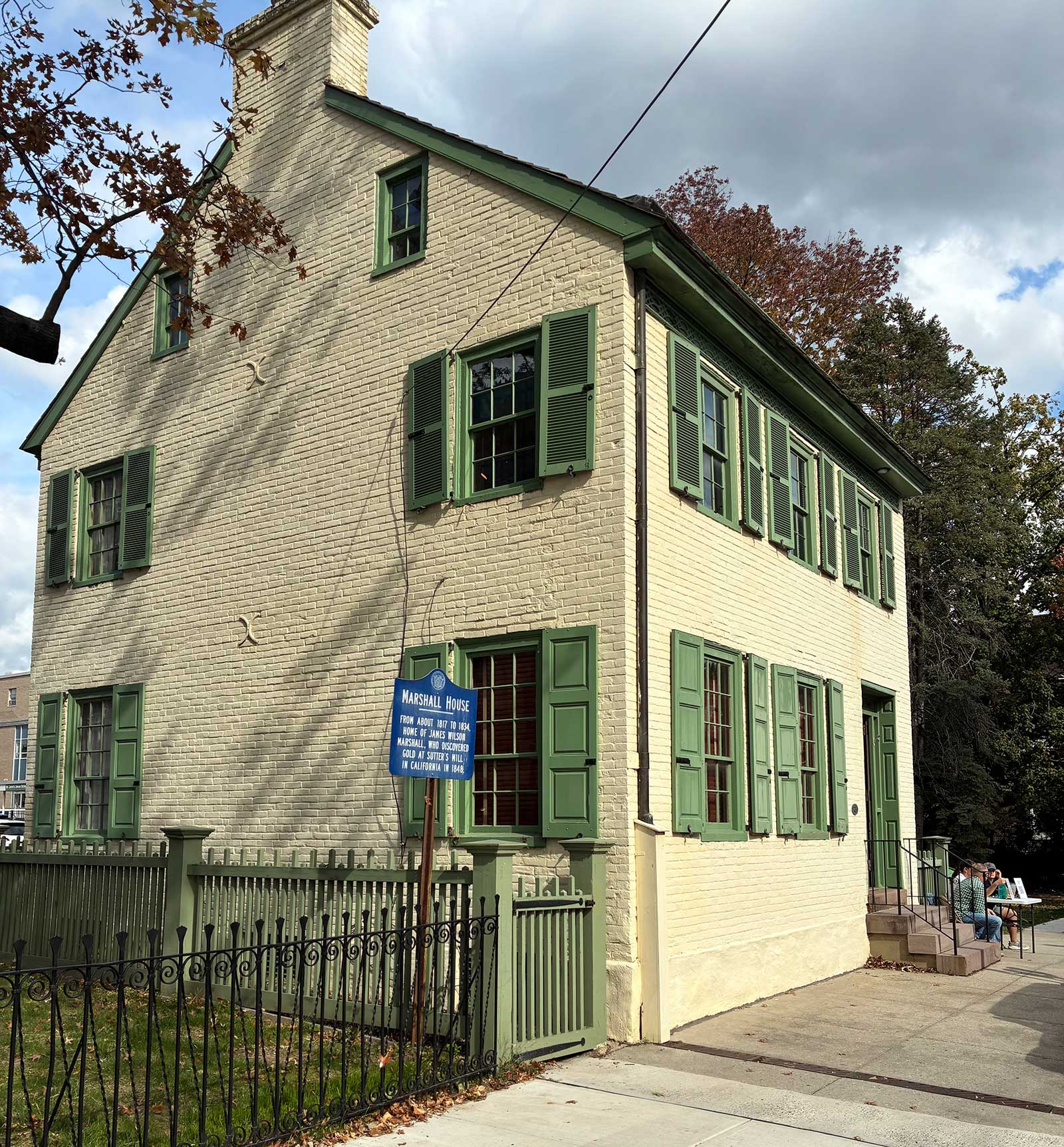
It was the day of the annual Lambertville House Tours, and Feuer joined the president of the historical society, Michael Mensch, at the Marshall House, a house museum under their auspices. It was fitting because this is where the township’s preservation movement began.
The boyhood home of James Wilson Marshall — built in 1816 on land bought from the town’s namesake James Lambert — was going to be demolished before the late Alice Narducci in the 1960s stepped in to save it. It is now listed on the National Register and the historical society now doles out awards in Narducci’s honor each year.

Lambertville is a prime example that wherever preservation thrives, so do the arts. Two blocks away sits another important landmark that was saved a few years later — Lambertville Station. The last train left in 1960, but it still feels like the gateway to the town and has plenty of parking for day-trippers. It was converted into a restaurant in the 1980s — Lambertville visionary James Hamilton had a hand in that — and it was one of the first signs of a revival that the town is still enjoying today.

Lambertville is only one square mile, roughly the size of Hoboken, but it packs a lot to do into that space and it has one of the state’s largest collections of landmarked buildings behind Cape May and Flemington. Many also leave time to venture across the bridge to New Hope. That was my original plan. But in addition to the nine landmarks on the house tours — including the Marshall House and the 1870 City Hall — with a brief pitstop at the cozy Lambertville Trading Company for a coffee and biscotti — there was plenty on the New Jersey side of the Delaware River for one day.

I sat at Lambertville Station, people-watching as the foot traffic flowed back and forth across the bridge to New Hope. Culturally, it is impossible to separate Lambertville from New Hope, which are in different states connected by a former toll bridge. Feurer joked that the two towns have a “sibling rivalry.” Today, they share much more in common in terms of real estate values and what they have to offer, but it wasn’t always this way. Lambertville was more industrial. With the help of the Pennsylvania Railroad and the D&R tow path became a hub of manufacturing, namely of steel, rubber, and pottery.
“It was a noisier and grubbier place,” said Mensch, Lambertville Historical Society president.

New Hope was always the more affluent sibling. But that affluence reached a breaking point in the 1980s, when artists and collectors began seeking cheaper gallery space and deigned to cross the bridge to Lambertville. At that time, many of the historic buildings had fallen into disrepair.
“Every large historic house has been boarded up at some point,” Mensch said.

Locals credit Jim Hamilton, the multi-hat artisan and visionary, with the town’s revival, encouraging more artists to take up shop here and using preservation as a vehicle for economic growth. The restoration of Lambertville Station is one of his crowning achievements. He even had a hand in bringing back the annual Lambertville Shad Festival, which happened as a result of the federally funded cleanup of the Delaware River in the 1970s.
It is sort of poetic that this was all happening at once as environmentalists were literally dredging up the last vestiges of the industrial past while town leaders were rebranding Lambertville as a mecca for artists, antiques, and restaurants.
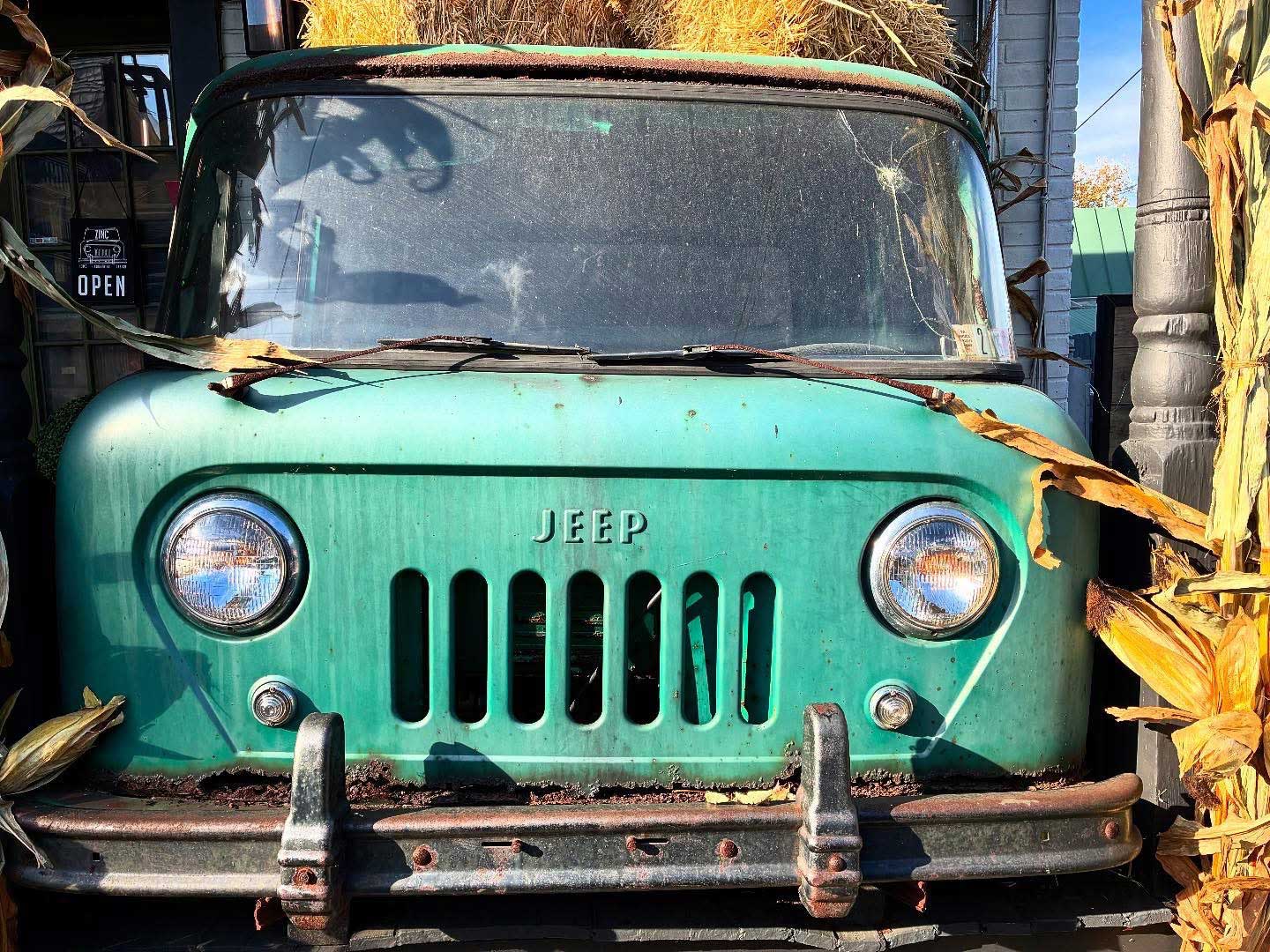
During a visit to Lambertville, it’s important to leave enough room just for meandering the streets and happening upon things — like the rusty jeep parked on the front porch of Zinc Home and the doo-wop-style sign at Del-Vue Arcade.
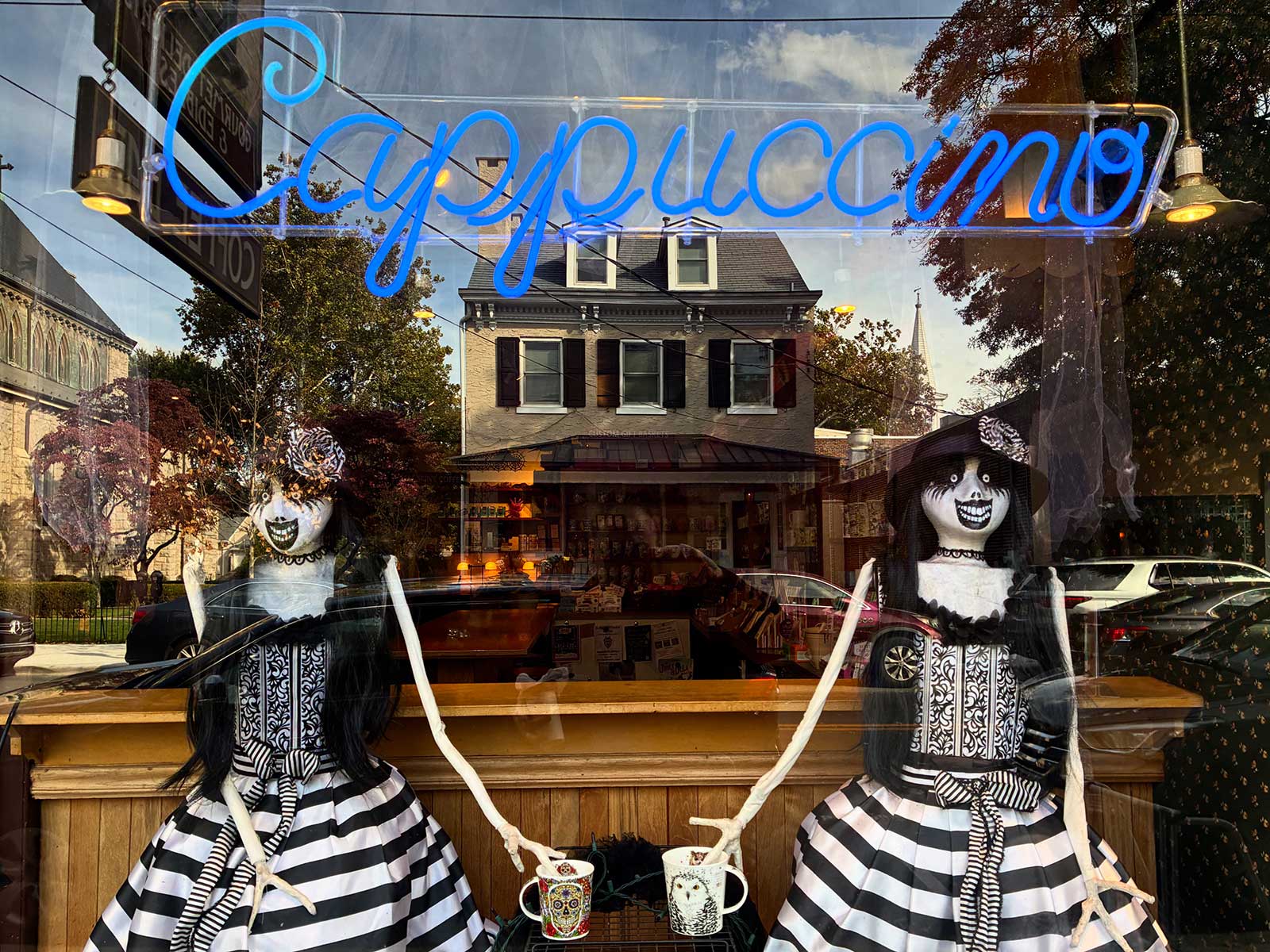
Another pleasant surprise was discovering the artworks of Dolores Dragon that are on display until until October 31. Each year, beginning in 1998, Dragon would decorate her home on North Union Street with her own sculptures — and it was through her efforts that Halloween became an Olympic sport in Lambertville.
Now in her 80s, Dragan passed the annual tradition of decorating down to her neighbor who founded a nonprofit last year called Trail of Magic in her honor. Now Dragon’s artworks can be found throughout the town — on porches and in shop windows. The artworks have Gothic sensibility in an Edward Gorey way — and at night the exhibits are black lit.

“It’s such a part of who we are in Lambertville, and we didn’t want to lose it,” said Lisa Shippy-Woods, the founder of the organization. “She likes things to be a little quirky and off-center.”
Shippy-Wood’s description of Dragon could apply to Lambertville in general. As you walk the streets, you’ll find shopowners and homeowners who share the same revulsion of normalcy. Homes are painted in bright hues of pink, yellow, and green, and shop windows often display something eye-pleasing or unexpected. Artists often set up shop right along the street, and if you stare at one of the historic homes long enough, a stranger might approach you to share some tidbit of history about it. It happened to me.
