
The ownership team behind a mostly shuttered medical facility in Jersey City has taken legal action over the rezoning of their property after they submitted a redevelopment proposal.
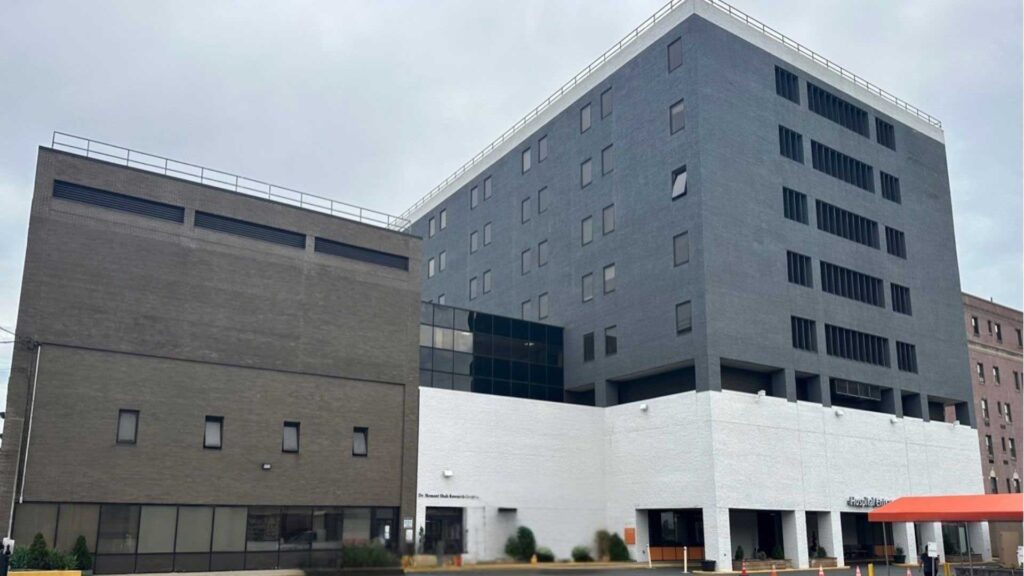
The holding companies behind Heights University Hospital at 176 Palisade Avenue filed suit in Hudson County Court on February 2, naming Jersey City as the lone defendant. The former Christ Hospital was taken over by Hudson Regional Health last year but was on poor financial footing.
Per our reporting in October, the hospital was set to close without additional state aid to keep it afloat. That same month, the owners sent a letter and proposal to the city, they say would create a brand-new, state-of-the-art hospital adjacent to the current facility to be paired with residential development through the city’s adoption of a redevelopment plan.

The plan was controversial to say the least, as it included 2,200 residential units and 1,150 parking spaces spread out among a series of 10-story buildings. The city acted quickly in December to adopt an ordinance that prevents senior housing and assisted living residences from being built in the city’s medical zone, which encompasses the property and restricts the development of the land.
“Passing this ordinance makes it clear that they can’t build luxury-only housing, that anything that would come in the future would have to be negotiated with the city, and we will guarantee and make sure that there’s real acute care that is on that site,” said then Mayor-elect James Solomon during the December meeting at City Hall when the changes were made.

But the litigation filed this week from Heights University Hospital says that the city ignored the advice of their own planning department when enacting the zoning changes. The case claims that a memo from the planning department wrote that “[senior housing and assisted living] uses should not be removed from any medical or medical overlay district” as “they are both recognized as inherently beneficial uses and are complementary to the other Medical District uses.”
Additionally, the case says the city’s Master Plan recommends that both senior housing and assisted living facilities “be located in areas that are within walking distance of neighborhood amenities” and that “removal of these uses at these locations would be in conflict with the Master Plan.”
The complaint also cites a second memo from the planning department that reinforces the assisted living assessment, as it allegedly noted that “assisted living should not be removed from the Medical district, as there are frequently medical components of this use that are vital to the residents.”
As a result of those conclusions, the planning department allegedly recommended that one segment of the Heights University Hospital be retained as an M Medical District and the balance of the land be re-zoned as the RC-2 District with the Medical Overlay Zone.
But none of those changes were considered. According to the lawsuit, the city’s Planning Board voted that the zoning changes were inconsistent with the Master Plan but the City Council approved the modifications anyway just before the new year.
“City Council did not adopt any resolution setting forth its reasons for enacting the Ordinance despite its inconsistency with the Master Plan, and it likewise failed to record any such reasons in the official minutes,” the lawsuit says.
The ownership of the hospital claims that the Ordinance was not adopted to promote the general welfare, but instead reflects arbitrary, capricious, and unreasonable governmental action designed to prevent development of the subject properties.” They seek a declaratory judgment from the court voiding the ordinance.
A spokesperson for Jersey City told Jersey Digs when contacted about the lawsuit that while the city cannot comment on ongoing litigation, they were pleased that a judge rejected the developer’s attempt to temporarily block the ordinance.
“We believe that we will prevail on the merits in this case. Mayor Solomon reiterates his commitment to returning real, acute health care to the Heights,” the statement concluded.
In a piece of related news, the lawsuit mentions a new plan that has been submitted to Jersey City for the hospital land. City records indicate that it currently includes several buildings and a total of 2,223 units split between assisted living, senior housing, and residential, with office and retail components to go along with 875 parking spaces in a structured garage.
Further details or renderings of the new proposal have not been made available through the city’s portal as of press time.
EDITOR’S NOTE: This article was updated from an earlier version adding a statement from Jersey City regarding the lawsuit.