
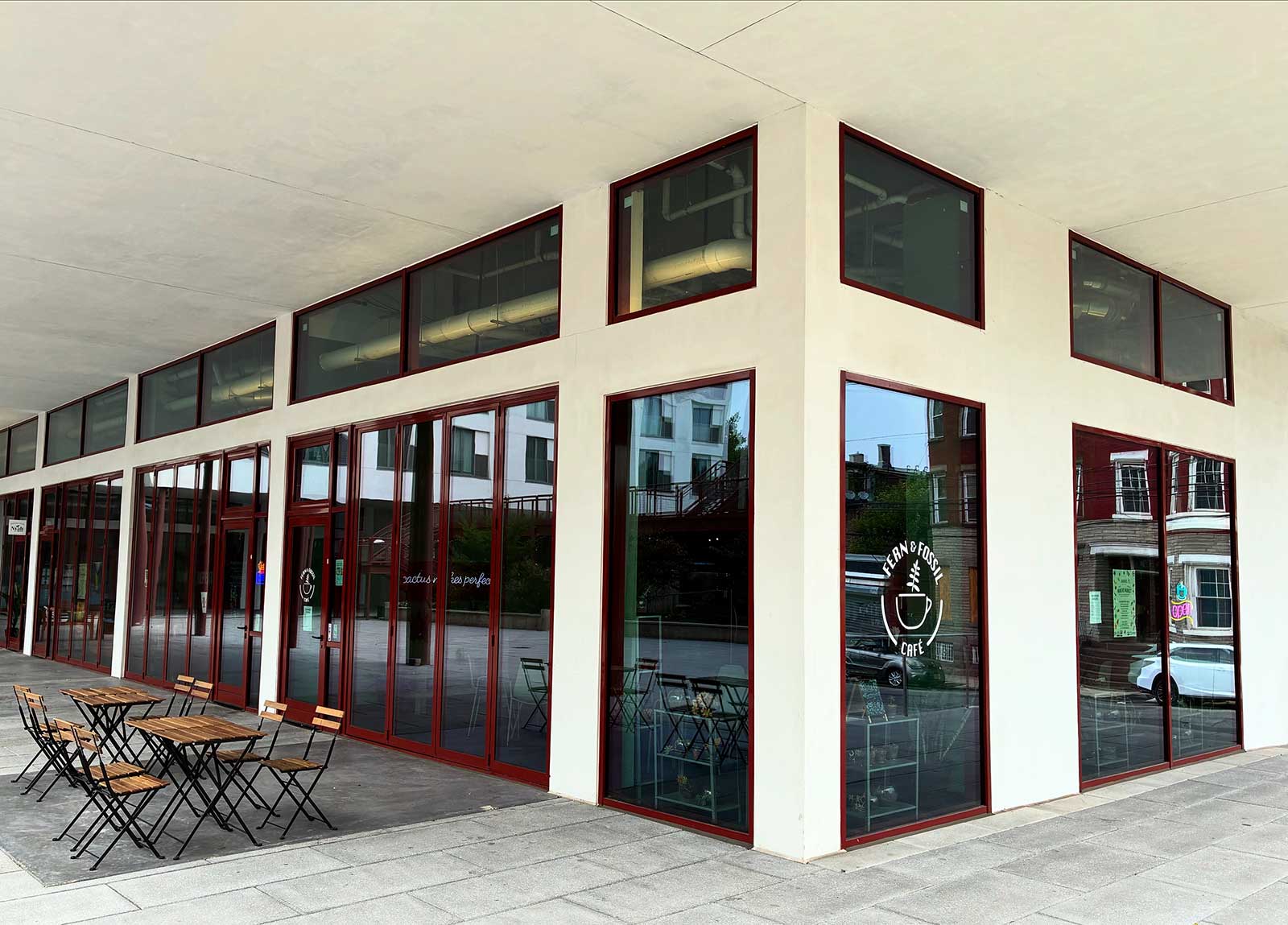
Samantha Katehis’s coffee shop on Newark’s MLK Boulevard is a literal oasis. Climbing plants and succulents line the walls and entangle the railings at Fern & Fossil. Regulars routinely seek out her green thumb. Last Sunday, one customer asked for advice on how to save a jade plant from the brink of death. Katehis diagnosed the problem and sent the woman off with a caffeinated smile.
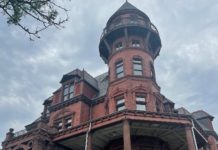
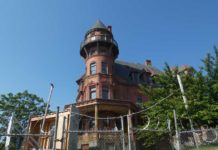
Katehis’s coffee shop opened last year behind the Krueger-Scott Mansion, the home of brewer Gottfried Krueger at 601 MLK Boulevard. Avi Telyas, CEO of Makerhood, invested $10 million to restore it. After completing one of the city’s most important historic preservation projects in years, Telyas turned his focus to becoming a small business incubator. Katehis’s cafe is a product of that.
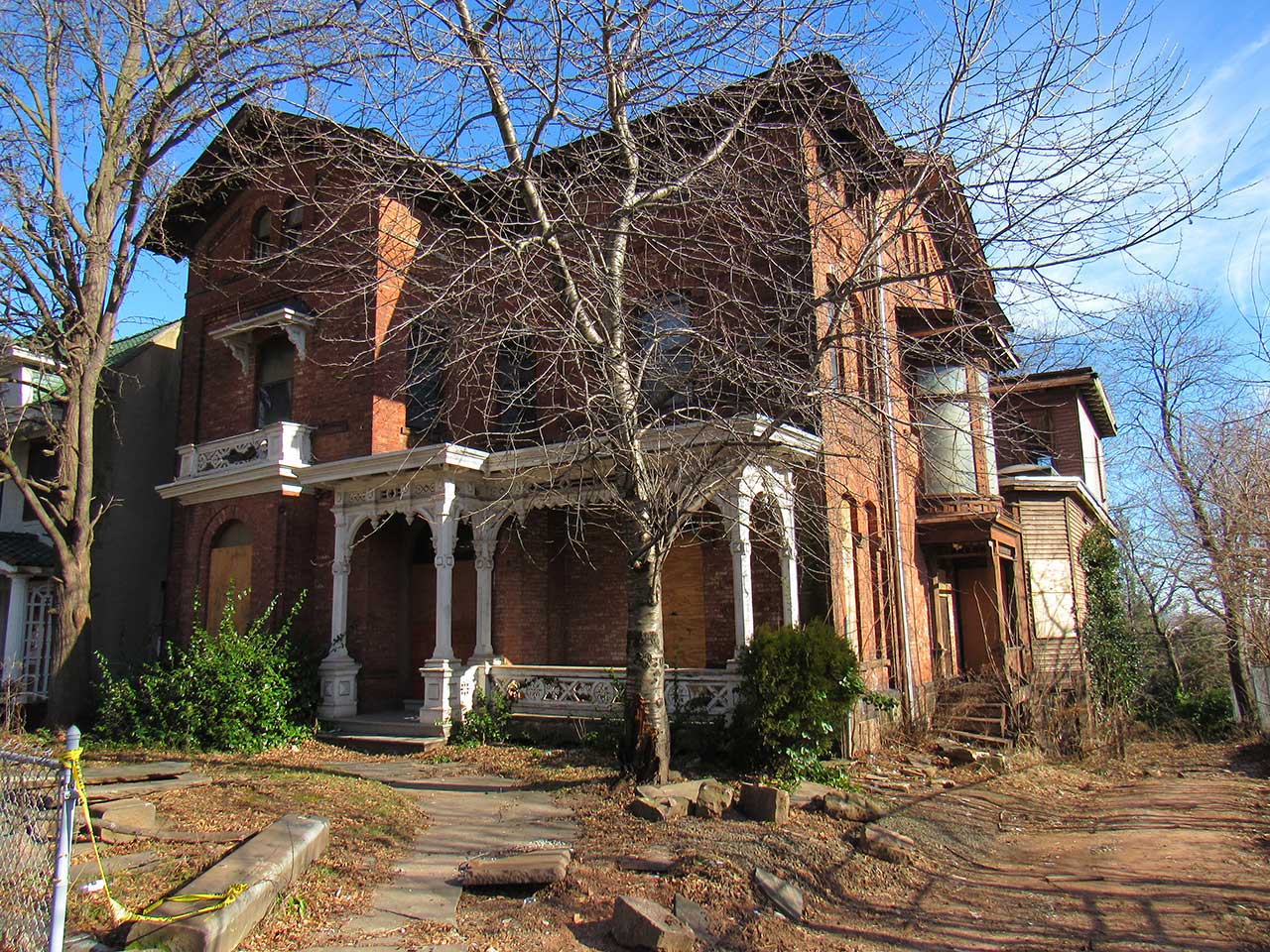
But the venture is helping to turn around a neighborhood that in recent decades was known more for its empty lots and rundown historic buildings. Katehis rents an apartment on site, so she has a front-row seat to the neighborhood’s transformation.
“I love the idea of living here and having a storefront here,” said Katehis, who moved back to her hometown after going to school and traveling. “To have a business here, you have to understand the ecosystem.”

Tenants at Makerhood get an apartment and a retail space along with mentoring and low-rate financing. For Telyas, you can’t improve a neighborhood or a city unless you give residents the tools to succeed. “When folks don’t have a way to make a living, that’s when most of the social ills creep up,” said Telyas, when Jersey Digs spoke to him in 2023.
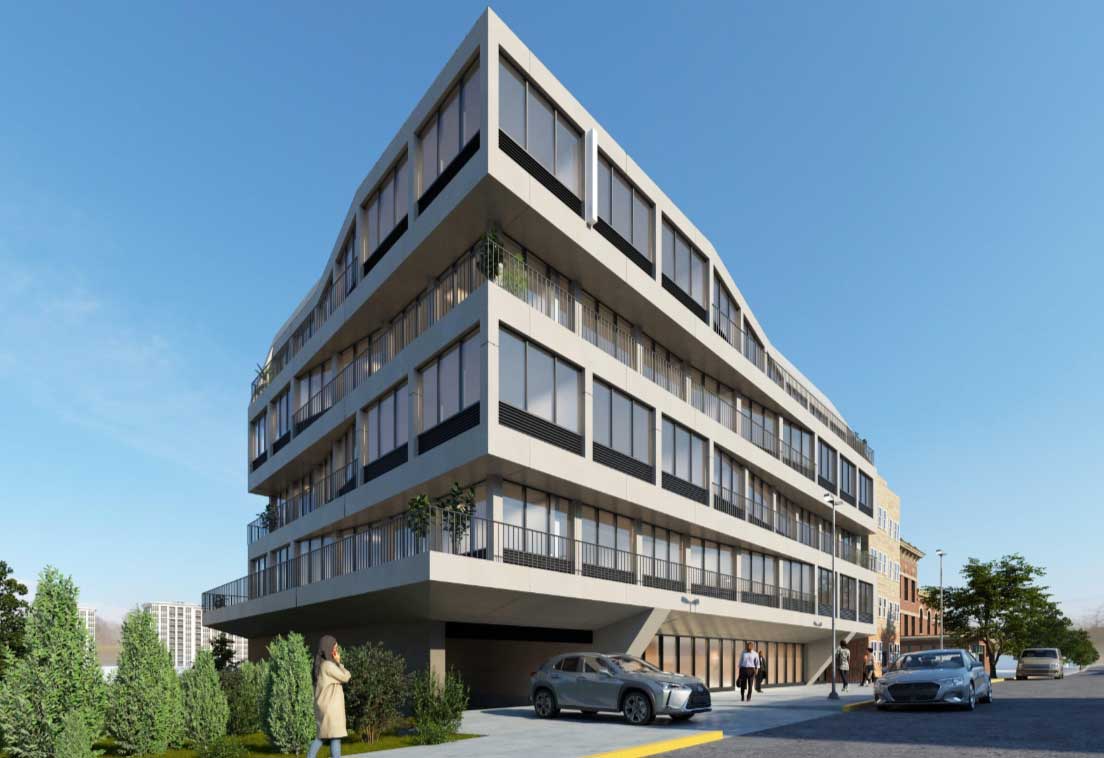
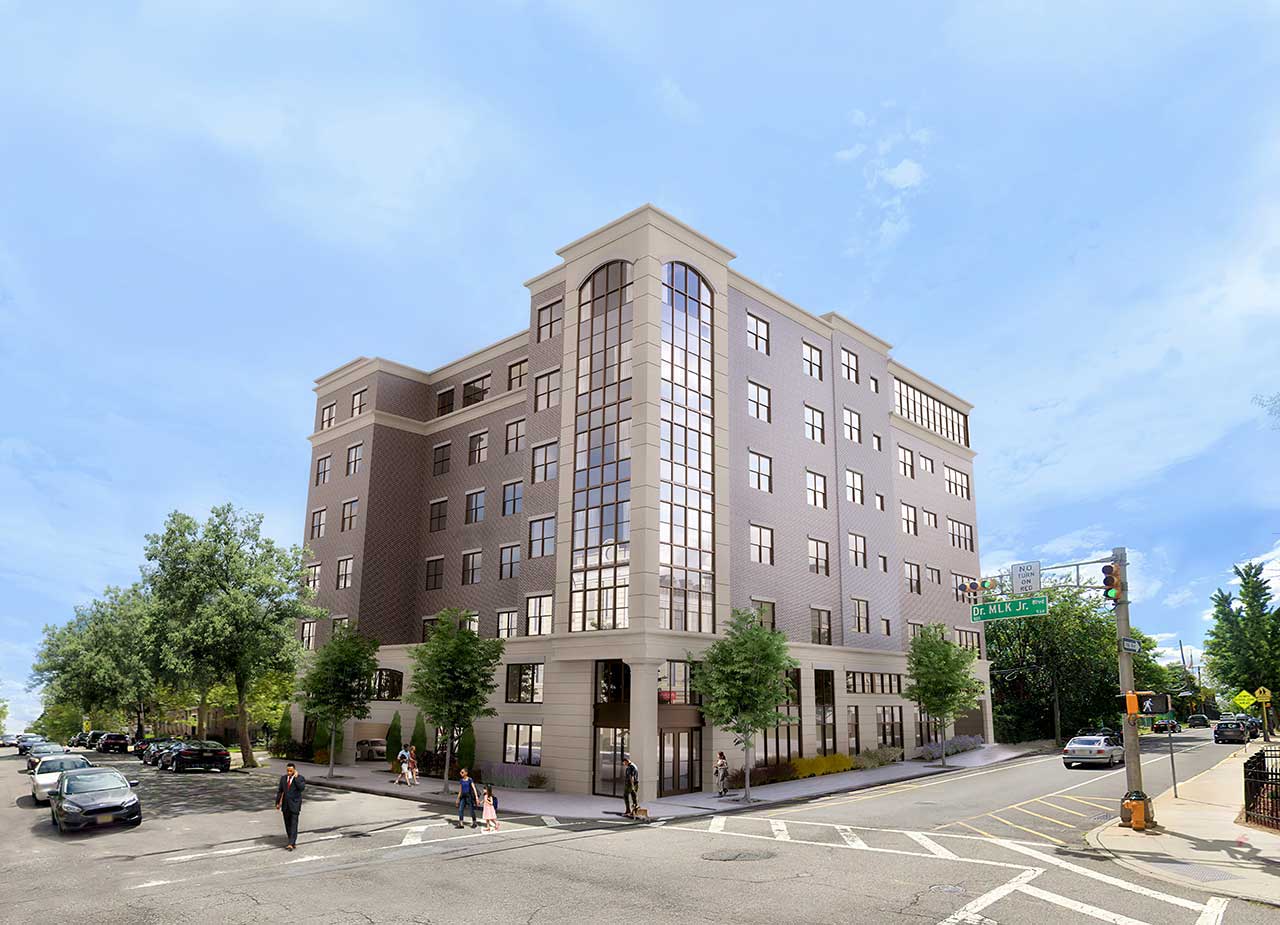
But Telyas isn’t the only developer investing in the neighborhood lately. Two major developments are proposed within walking distance of the mansion: Mid-Atlantic Development Alliance is currently building a seven-story building at 535 MLK Boulevard. Down the street, Yaakov Schwarzman teamed up with architect Marat Mutlu to fill a lot at 611 MLK Boulevard that has been vacant for over 50 years. In its place, Schwarzman is planning a 69-unit building with an outdoor terrace overlooking the skyline.
This once-wealthy stretch suffered a rapid downturn after the riots. Slowly, the gaps of vacant lots are filling in. One of the first signs of change was the redevelopment of the Brick Towers — where Senator Corey Booker used to live — which sat abandoned for a decade after being demolished in 2008. In 2018, Pennrose Properties built the five-story, 154-unit Ashton Heights.
Perhaps no one knows this neighborhood better than Richard Grossklaus, who moved to Newark a year after the riots to open the addiction treatment center Integrity House.
“When we came to Newark, I was buying building after building,” Grossklaus said.
When many residents were fleeing to the suburbs, Grossklaus was doubling down on his investment. Buying real estate was a way to stabilize his nonprofit, but it also served an important role of preserving the history of the homes here and fending off blight. One of the homes he bought was the National Register-listed Coe Mansion at 698 MLK Boulevard. He has since sold the main home and the butler’s cottage to a developer, cashing in on a 50-year investment. He still owns the carriage house.
It is no accident that Gottfried Krueger built his famous mansion here. Back in the day, when it was known as High Street, this thoroughfare was one of the most fashionable addresses in town due to its lofty position overlooking the city. There are a few National Register-listed landmarks, including the Coe Mansion and the Feiganspan Mansion, alongside handsome churches and rowhouses.
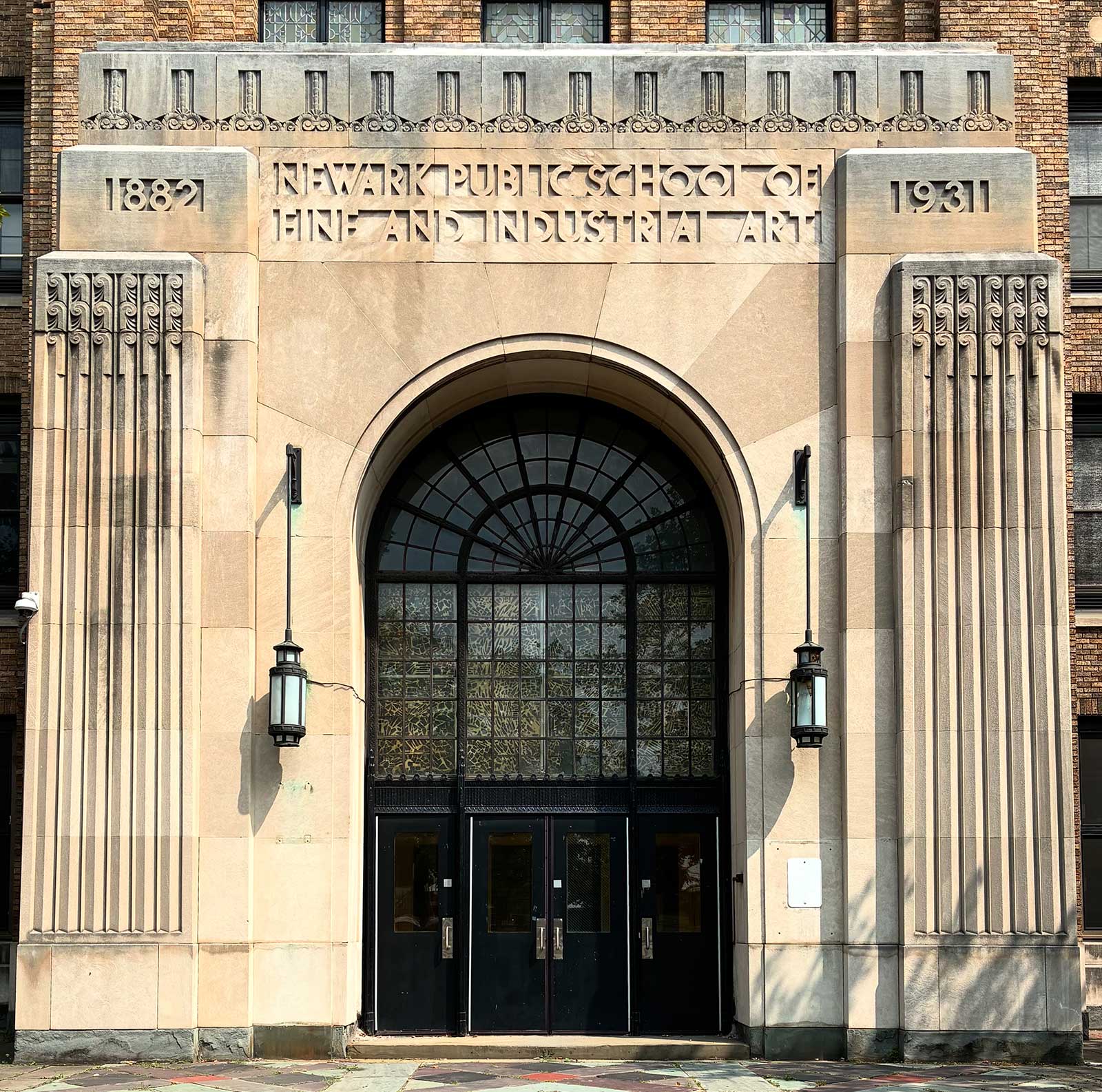
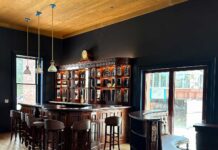
For those who want to wade deeper into High Street’s history, Have You Met Newark offers tours of the Krueger-Scott Mansion and the surrounding neighborhood. It is the only way to peek at the restoration and admire all of its Victorian excesses. The home is now used as offices and a co-working space and is not open to the public. The tour ends fittingly at the shops behind the mansion, including a cigar shop, a boutique shop, and Katehis’s coffee shop. Katehis said her hope is to recreate on MLK Boulevard the neighborly feeling of Halsey Street’s now-shuttered Black Swan coffee shop.
“I can think of so many times when I walk into Black Swan or a local coffee shop, and maybe I wasn’t feeling so great, and they tried to cheer me up,” she said. “It’s important to be seen.”