
Last year, the nearly three-decade fight to save Jersey City’s Sixth Street Embankment from demolition finally came to an end when a settlement was reached with the developer.
Now, the work of the Embankment Coalition is shifting to what it always wanted to do — imagining what the abandoned rail corridor could look like when it is finally turned into a public space. To do that, they first have to understand what is up there after all this time. It turns out that, devoid of human interference, a surprisingly rich ecosystem has sprouted up that is worthy of protection in its own right.
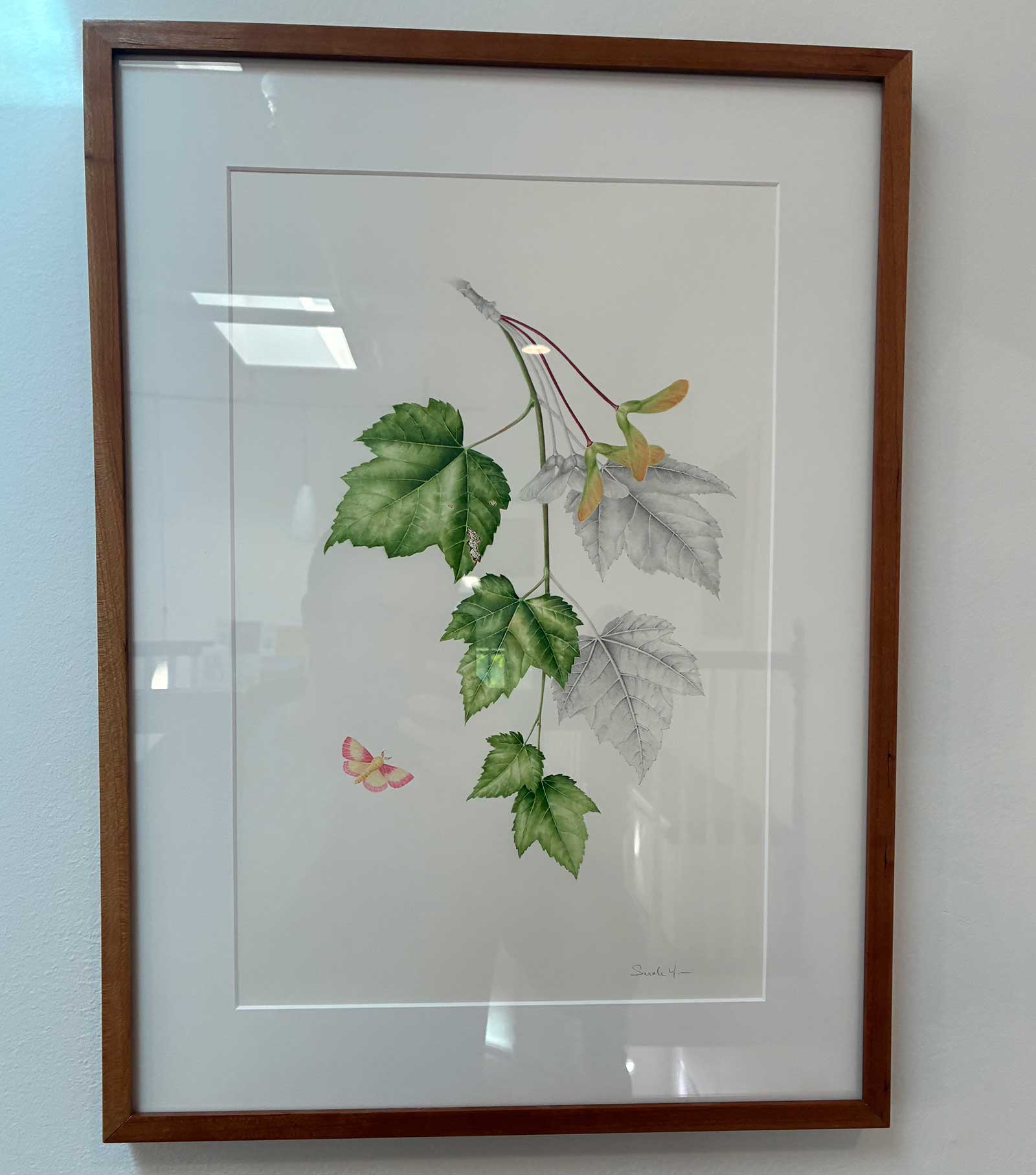
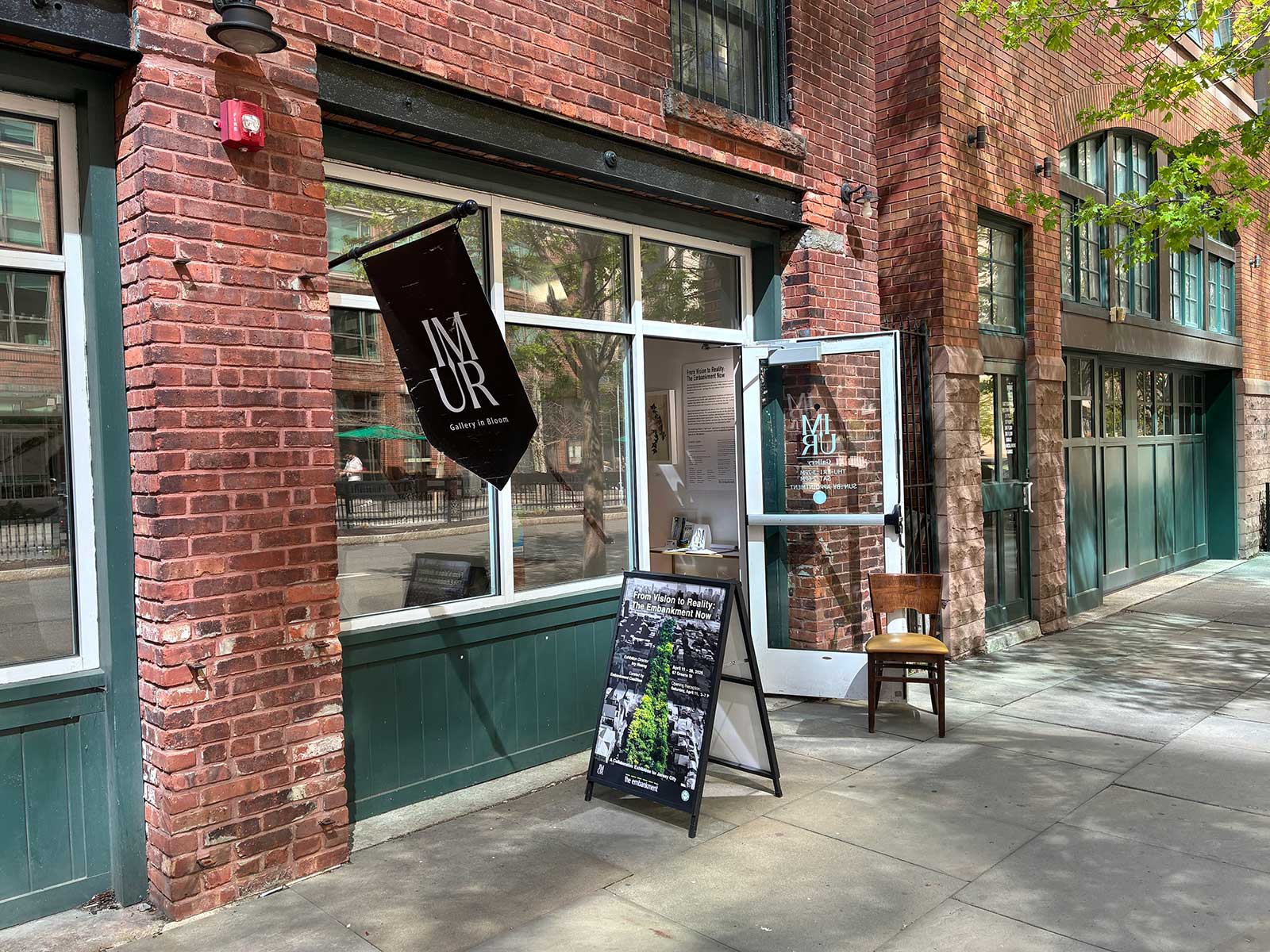
That was the subject of a short-lived but impactful exhibition at IMUR Gallery in downtown Jersey City called “From Vision to Reality.” The second floor of the show featured Sarah Yu’s botanical illustrations and Kay Kenney’s photographs of species many would be surprised to find along the corridor. Photographs by Anthony Boone, Edward Fausty, and William A. Ortega document rusted train tracks and other railroad artifacts left behind.
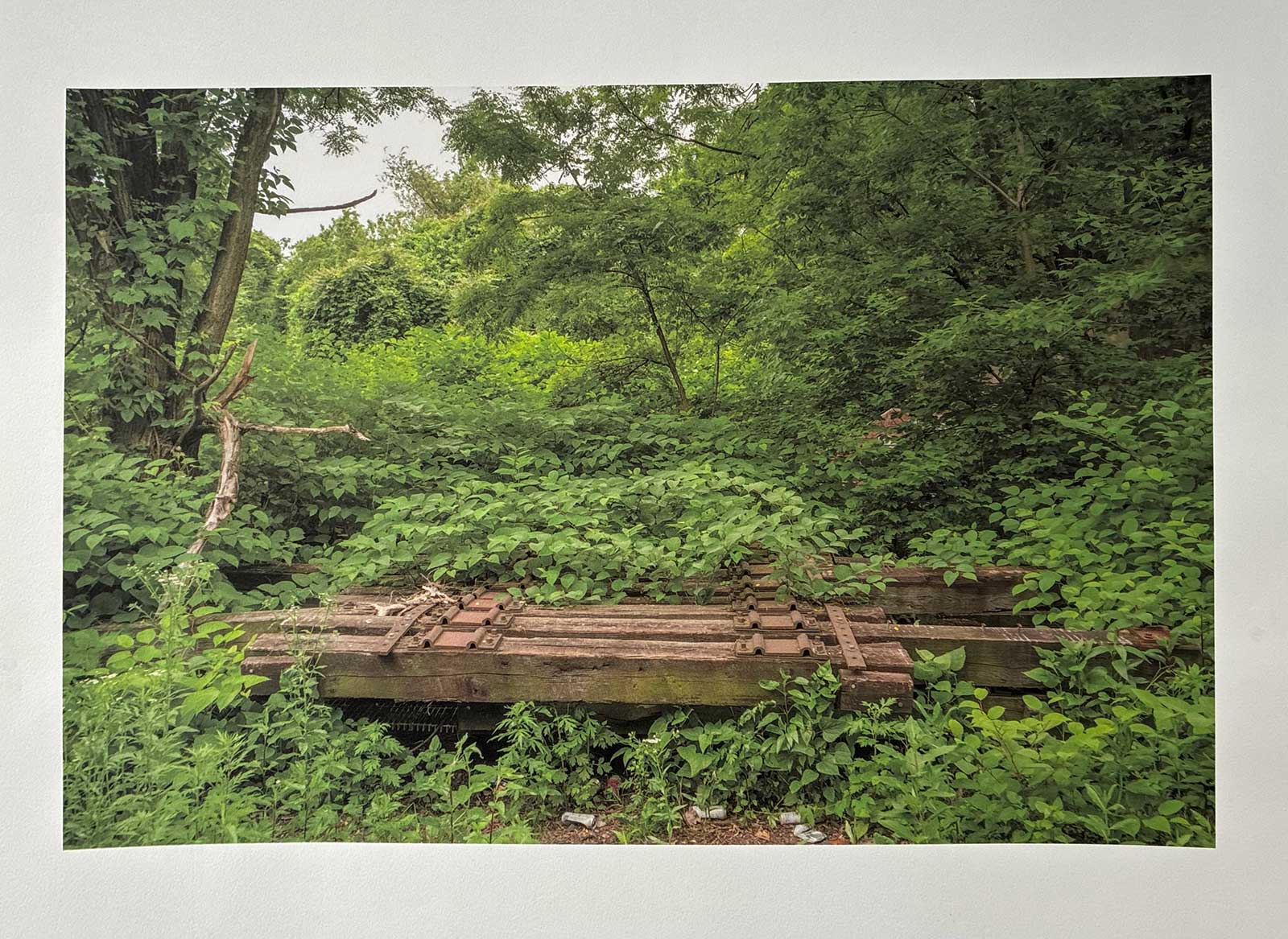
Peter Delman, one of the founders of the Embankment Coalition, said he worked with gallerist Ivy Huang to reprise a 2022 show at New Jersey City University called “The Embankment on My Mind.” These artists were on a reconnaissance mission, serving as the eyes of the public when the tracks were sealed off, discovering an oddly rich habitat hidden in plain sight before an actual survey was completed.
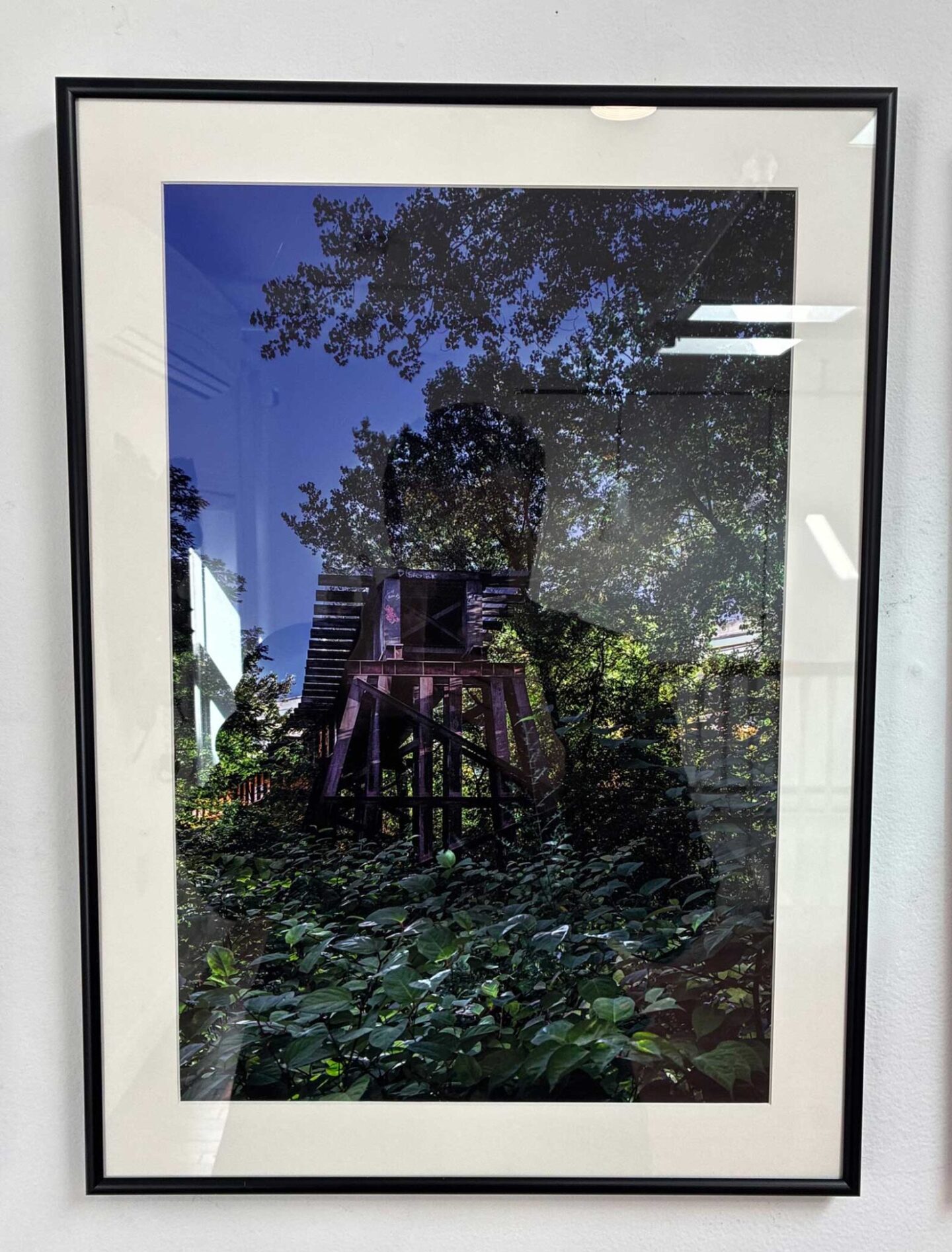
In 2022, the Embankment Preservation Coalition commissioned Rutgers University Professor Frank Gallagher and the Meadowlands Environmental Research Institute to survey the ecology found there. They discovered that because it has been closed off to humans for the past two decades, a healthy forest has grown in its place, one that is surprisingly devoid of invasive species.
The Sixth Street Embankment has become known as Jersey City’s version of the High Line. But Sean Gallagher, who leads the coalition’s design team, believes what they have is actually unique.
“The city doesn’t realize what it has,” Gallagher said. “It’s an entire ecosystem that grew up on its own without our intervention. We want people to understand how special this is.”
Gallagher, Director of Sustainable Design at Diller Scofidio + Renfro, the firm that designed the High Line, is positioned as an authority in his comparisons to the Embankment. He believes what Jersey City residents have is something more than a new public space.
To protect the ecosystem, Gallagher sought to design pedestrian infrastructure that works with what is there, rather than ripping everything up and starting anew.
“The approach we have taken is, the less we disturb, the better it is. So we developed this idea of a ‘light touch,’” he said. “Taking this light touch approach is also smart for the city because the forest is super healthy and the city hasn’t paid one dime.”
Jack Lefeber, an architect who works alongside Gallagher, said the design would use structures made of wood or stone that “melt into the forest.”
“When you think of an urban park, you think of the rubber ground, a big playground, things like that,” said Jake Lefeber, a volunteer on the Embankment’s design team. “Building that typical playground at the embankment would destroy much of the ecosystem there and also be more costly.”
The embankment is comprised of six separate “blocks.” When it was completed in 1905 by the Pennsylvania Railroad, the segments were connected and carried rails to a freight yard along the waterfront. The Embankment Coalition plans to reconnect them with wooden bridges, forming a continuous park from Marin Boulevard to Brunswick Street.
In 1998, under Mayor Bret Schundler, a redevelopment plan was drafted that could have led to the demolition of the entire embankment. Delman and Maureen Crowley, who live near the structure in Harsimus Cove, launched into action. In 2000, the Embankment was listed on the State Register, providing some level of protection. Despite the nonprofit raising enough money to buy the embankment, Conrail sold it in 2005 to a developer, the Albanese Organization, which led to 20 years of litigation. “It bounced between the U.S. District Court and appellate court,” Crowley said.
The settlement, which dragged on for a few more years, will allow the developer to construct a 40-story tower at the easternmost part of the embankment, featuring an entryway to the linear park. Crowley, who founded the coalition with Delman in 1998, said the settlement left her content. “We’re common-sensical — I think we got what we wanted,” Crowley said. “It’s a compromise we can deal with because we were looking at razing the entire structure.”