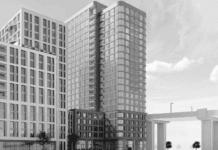

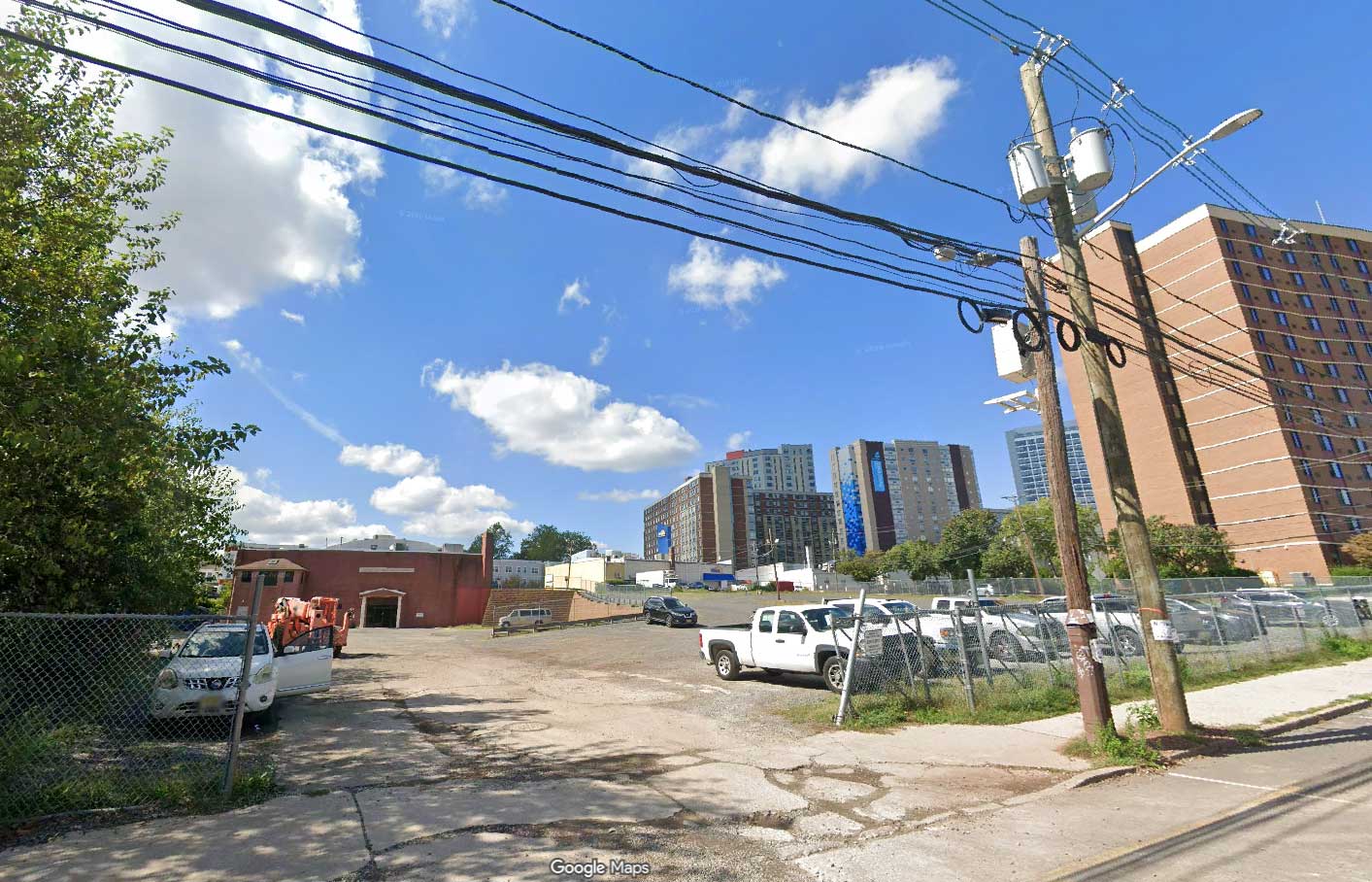
A proposal to bring a 45-story mixed-use building to the site of the Abundant Life Family Worship Church on George Street in New Brunswick recently took a step forward following approval from the city’s planning board. The project, located at 259 George Street, is slated to bring 800 apartments, commercial space, and a parking deck for more than 500 cars to the site, making it one of the largest building projects in the city and in Middlesex County.
The planning board voted to approve the application unanimously on March 9. The site plan application says that the developer, NB Plaza Owner Urban Renewal, a limited-liability firm affiliated with Aventura, Florida-based private equity firm Ifany, will allot 10% of the units, 80 apartments, for affordable housing.
Thomas Kelso, an attorney working on behalf of the applicant and also serving as counsel for the County of Middlesex, said during the public hearing for the project that the developer intends to allocate 160 apartments to affordable housing. He also said that the developer is seeking Aspire tax credits from the New Jersey Economic Development Agency.
Documents filed with the planning board show that the unit types break down as follows: 580 units will be studio and one-bedroom, 188 will be two-bedroom, and 32 will be affordable three-bedroom units. The bulk of the affordable apartments—96 out of 160—will be two-bedroom units. Another 32 studio and one-bedroom units will also be set aside for affordable housing.
Professionals working on behalf of Ifany explained that the building entrance will be located along Neilson Street and that the core of the first six floors will consist of parking wrapped by apartments. The project will include a combined 24,900 square feet of retail, intended to capture the vibrancy from downtown, spread across the ground and seventh floors of the building.
A portion of the building’s retail component will front Neilson and Morris streets. The side of the building facing Morris will include 6,000 square feet of ground-level retail, but the project plan also includes space for high-end retail and a spa or wellness tenant.
Ifany intends to bring an entertainment-type of tenant that is similar to Brooklyn Bowl or a rock climbing facility to the seventh floor of the building, but no commitments for the space have been made, according to John Zimmer of architectural firm Fogarty Finger Architecture, the lead architect for the project.
Zimmer said the building’s eighth floor will house a portion of the planned 18,000-square-foot amenities. The ground floor will include resident lounge and café areas, while the ninth floor will house coworking spaces, a gym, and lounges. Two terraces are also planned for the 34th floor of the building and the rooftop.
The project will keep the existing church building intact and develop the parking lot behind the building along Morris and Neilson streets. The parking structure will house up to 530 cars and include 130 electric vehicle charging stations. There is also a plan for a new 25-car surface lot off of George Street.
Ken Miller, the chief development officer for Ifany, added during the planning board hearing that the city council and Mayor Jim Cahill had already submitted letters of support for the project to receive Aspire tax credits before the site plan application was approved. The project will generate 1,100 construction jobs and 800 ‘indirect’ jobs across the region, he added.
A resolution from the New Brunswick Housing Authority, passed in February and designating NB Plaza Owner as the redeveloper, says the project has an estimated price tag of more than $300 million. The developer, according to the resolution, also submitted evidence that it has secured construction financing and that Jade Capital has committed $60 million in preferred equity financing. M&CF Investments and Seraphim Equities also committed $30 million in equity financing.
Although the project site is currently owned by the church—a tax-exempt entity—the site plan includes a subdivision of the existing lot. That subdivision, combined with the affordable housing component, strongly suggests the developer will seek local financial support in the form of a tax abatement from the city, in addition to the public financing already being pursued from Trenton.