

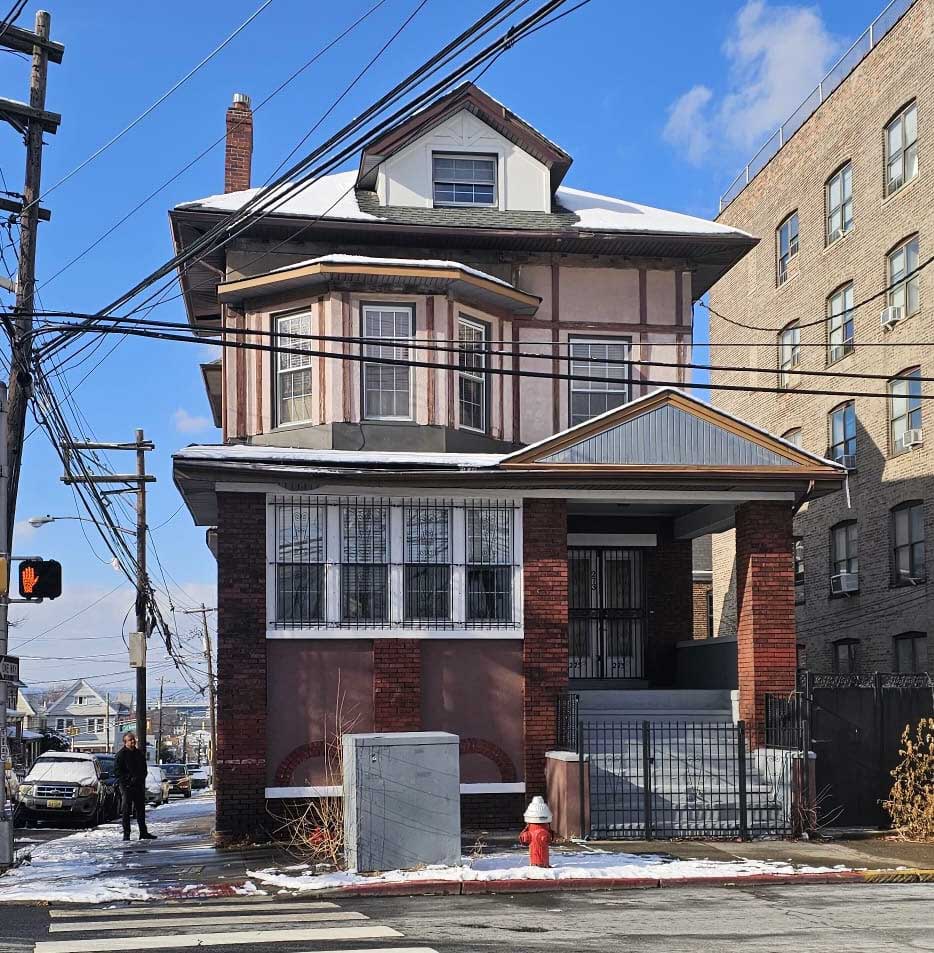
The historic home at 273 Bergen Avenue in Jersey City may not be an opulent Queen Anne home or a place where an admired historical figure lived, but the Historic Preservation Commission believed it was worthy of saving from demolition. The vote, denying the homeowner the ability to tear down the home, could signal an effort at City Hall to preserve more historic homes in Bergen Hill and its surrounds, which has very few designated landmarks.
Typically, the HPC can only review demolition applications for designated landmarks. But the Tudor Revival home at 273 Bergen Avenue is listed in the Master Plan’s Historic Preservation Element, published in 2024.
There appears to be a concerted effort to protect more historic buildings in this part of town because a considerable number of them appeared in the last Master Plan’s Historic Preservation Element.
Most of the city’s designated landmarks and historic districts are located downtown. But there is a good reason to protect many of the buildings on this side of town, known for its churches, row houses, and brownstones.
Chris Perez, board president of the Jersey City Landmarks Commission, supported the vote to deny demolition, noting that the intersection at Claremont and Bergen Avenue is notable for its variety of architecture, including Victorian and Art Deco buildings.
“You see the timeline in the context of the history of development in the area.” “Unfortunately, we’ve lost a lot of these examples because of that development. So I think it’s critical that we keep this example. Tudor Revival style is a rare example in the immediate area, and that’s why it’s essential to keep this site and not demolish it.”
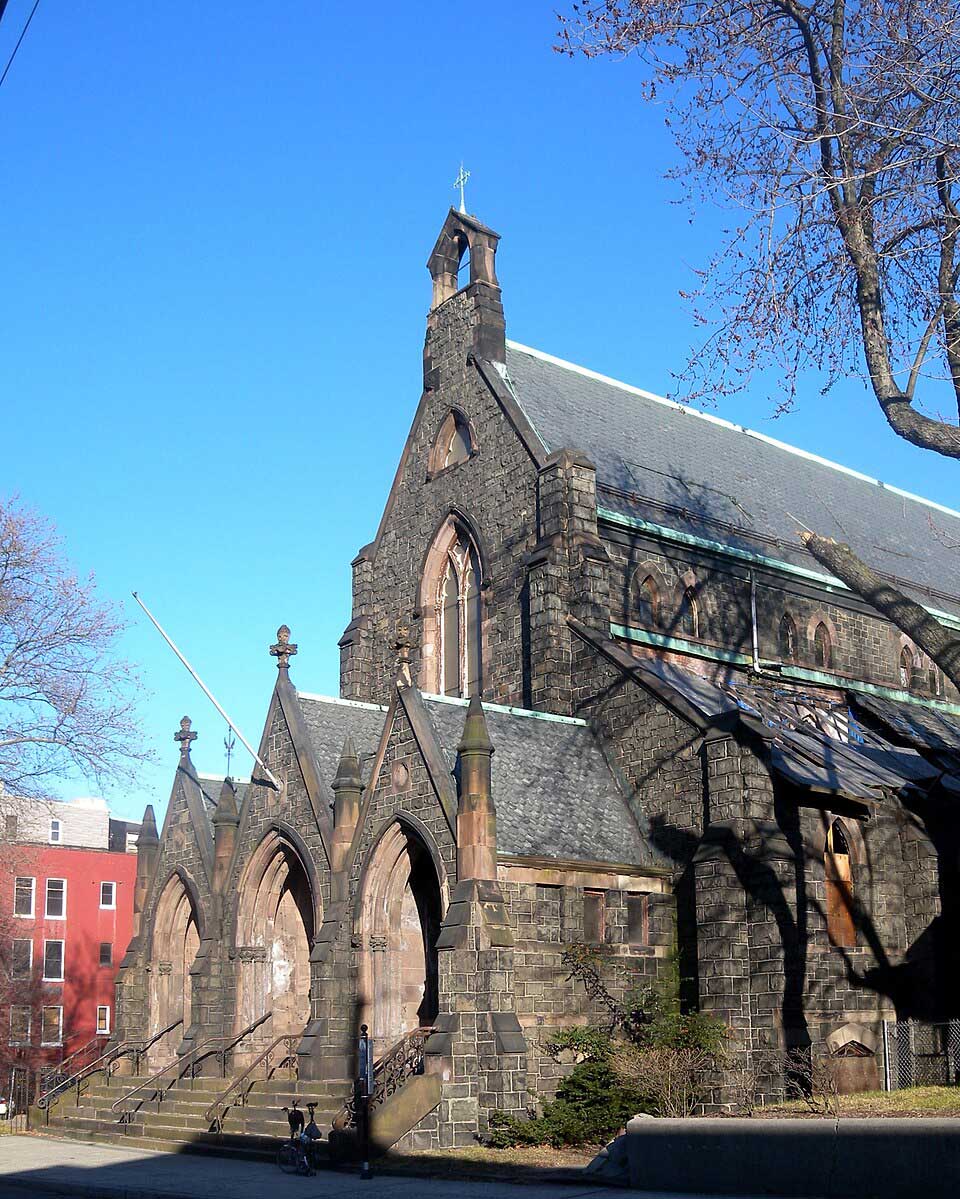
The home at 273 Bergen Avenue is not far from what used to be the Bergen Hill Historic District, which suffered the unusual fate of being undesignated. St. John’s Episcopal Church was at the center of that neighborhood. In the 1980s, there were even brownstone tours of the neighborhood. Property values rose. But so did property taxes, and not everyone was pleased.
The short version of how Bergen Hill lost its only historic district is that the Historic Districts Commission — the precursor to the HPC — was dissolved in 1987 to be reformed to comply with state laws. While it was dissolved, the longtime residents fought to have the designation removed. There were also racial elements to this whole saga that you can read about in the New York Times. That experience of pushback in the part of town could have stifled preservation efforts on this side of the city ever since.
In 1991, SHPO ruled that Bergen Hill remains eligible as a historic district, along with another neighborhood called Communipaw-Lafayette. A third potential historic district, Sherwood-Claremont, was highlighted in the master plan’s Historic Preservation Element, though little is known about it, as no architectural studies have been completed for this neighborhood yet. If one were designated someday, the home at 273 Bergen Avenue would likely fall within its borders.
Could a historic district someday return to Bergen Hill or nearby? One thing Jersey City’s preservationists have learned over the years is that the designation of new historic districts can’t happen without the residents taking the lead and rallying for that to happen. It can take years to reach the finish line. The last historic district designated in Jersey City was in 2016 when the West Bergen-East Lincoln Park Historic District was created. It took the tireless advocacy of residents like Charlene Burke and the West Side Community Alliance.
Even as the proposed Sherman Place Historic District in The Heights inches toward designation, many contributing buildings continue to be lost, including St. John’s German Methodist Church, demolished in 2019, and Grace Lutheran Church, demolished in 2020. The same is happening in the neighborhood around 273 Bergen Street. In the 1980s, a notable Queen Anne home at 43 Emory Street that preservationists tried to landmark was torn down and replaced with an asphalt lot behind a Salvation Army. Fortunately, the listings in the Master Plan could stave off the loss of more historic buildings while the Historic Preservation Office determines if enough still remain.