

At the height of the railroad age, the 20th Century Limited epitomized luxury travel. Traveling from Grand Central to Chicago, celebrities like Walt Disney and Lucille Ball were pampered with white-glove service and passengers walked on a red carpet that stretched the length of the train. Although the train went defunct in 1966, it lives on in the pop culture tradition of “walking the red carpet,” which was later used for movie premieres and award shows.
Richard King, president of the Tri-state Railway Historical Society, showed me a piece of the red carpet, which was rolled up like a scroll and sitting on a shelf inside their new archive at 408 Main Street in Boonton.
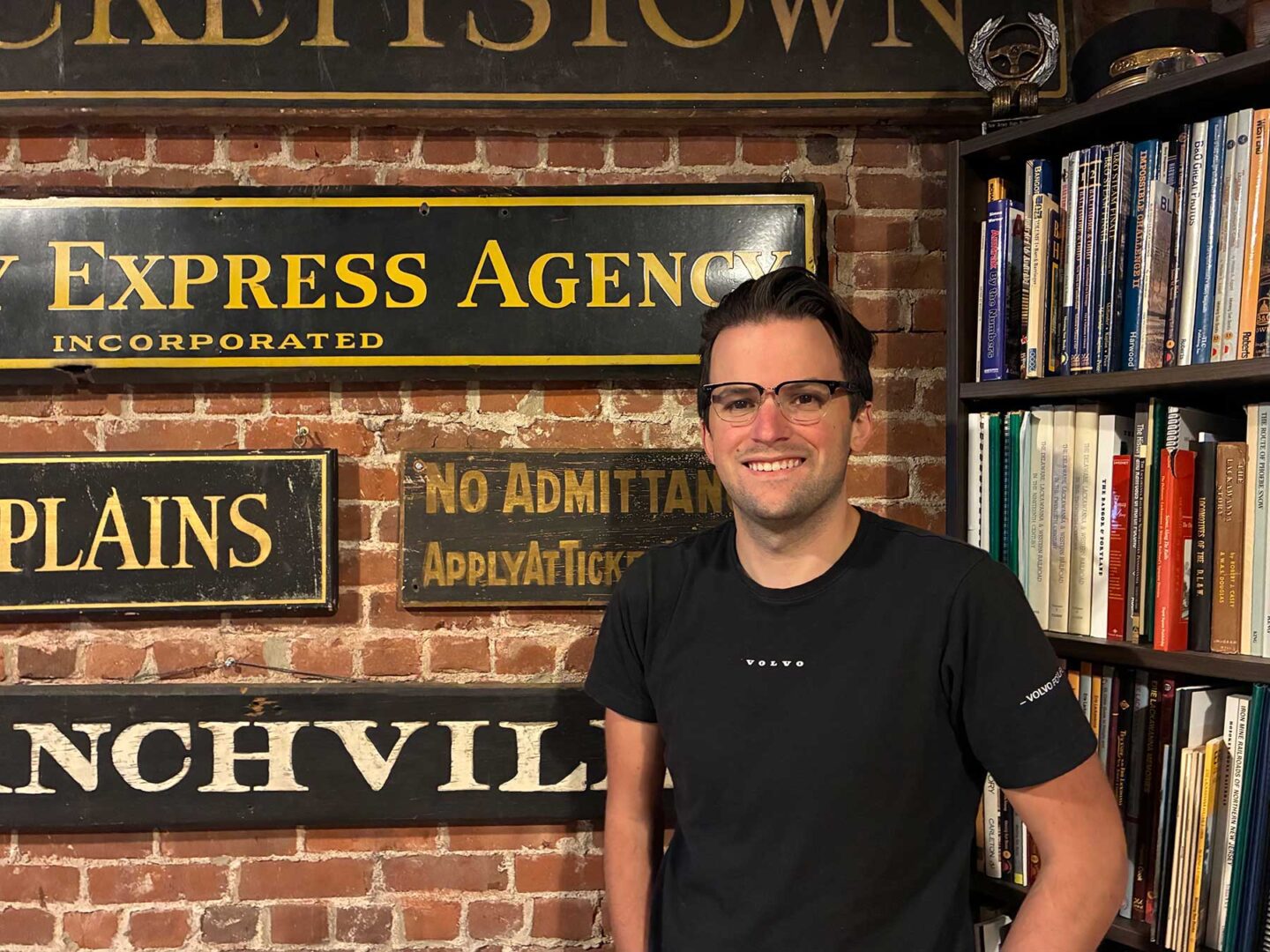
This is the organization’s first archive, and it certainly needs one with a mission as broad as its own — preserving the history of a once-crowded rail network in New Jersey, New York, and Pennsylvania.
Although the archive is not yet open to the public, it will be once they make sense of the vast collection. Boxes and boxes of photographs, rare artifacts, and colored-glass negatives are stacked on four ten-foot-high metal shelves and must be catalogued and digitized.

Last year, the National Railway Historical Society awarded King and his team a grant to digitize a collection of 200,000 images. In the first year, 10,000 were scanned, which should convey the scale of the undertaking.
“It would be a shame to have the collection locked away and not make it available to the public,” King said. “But we’re still in the process of going through it.”
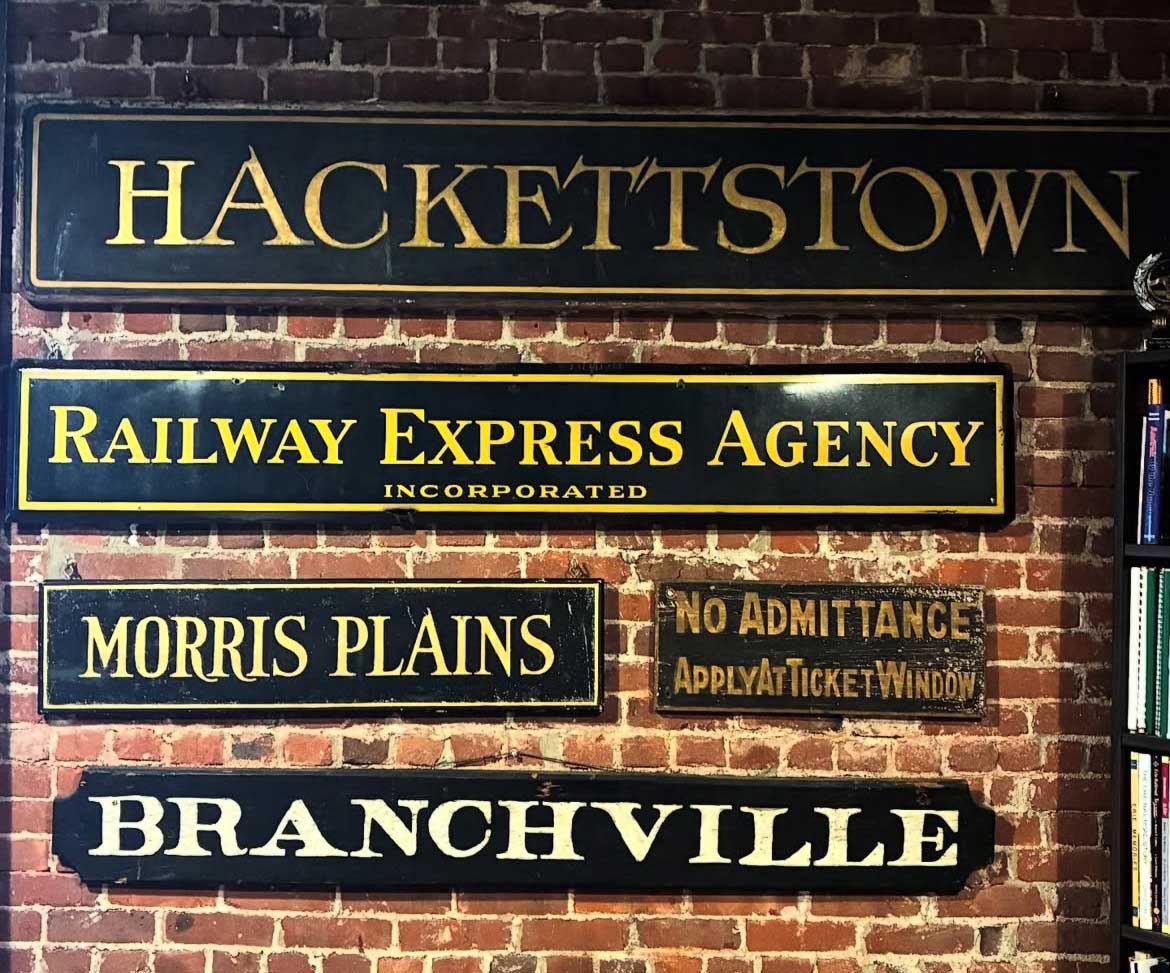
Tri-State Railway often gets donations of archival materials, so the collection is always growing. For instance, when Kingsland Station in Lyndhurst closed for good, NJ Transit gifted them the station sign, which now hangs on the exposed brick wall. A recent trove was gifted to them when NJ Transit moved to the Gateway Center in Newark and needed to free up storage space.
King opened one of the boxes off the shelf at random, revealing a crisp, black-and-white photograph from 1988 of a train with Erie Railroad’s “E” emblazoned on the front. The quality of the photographs is striking. The back of the image is signed and dated by their former founding president and retired trainmaster, Mike Del Vecchio, who passed away in 2023. The following year, King took the helm of the 61-year-old organization.
King, who is from Union, first became fascinated with railroad history as a child, discovering the remains of the Rahway Valley Railway that traveled through his hometown until 1992. “Being interested in trains, I couldn’t help but notice all the old bridges and railroad tracks and wonder, what was this?” he said.
Part of the line is still alive, subsumed into the Morris & Essex line, though the rest remains abandoned. There is a movement, however, to transform that abandoned Rahway Valley corridor into a rail trail, and state officials tapped King, who authored a book about it called Just a Short Line in 2015, to help with research.
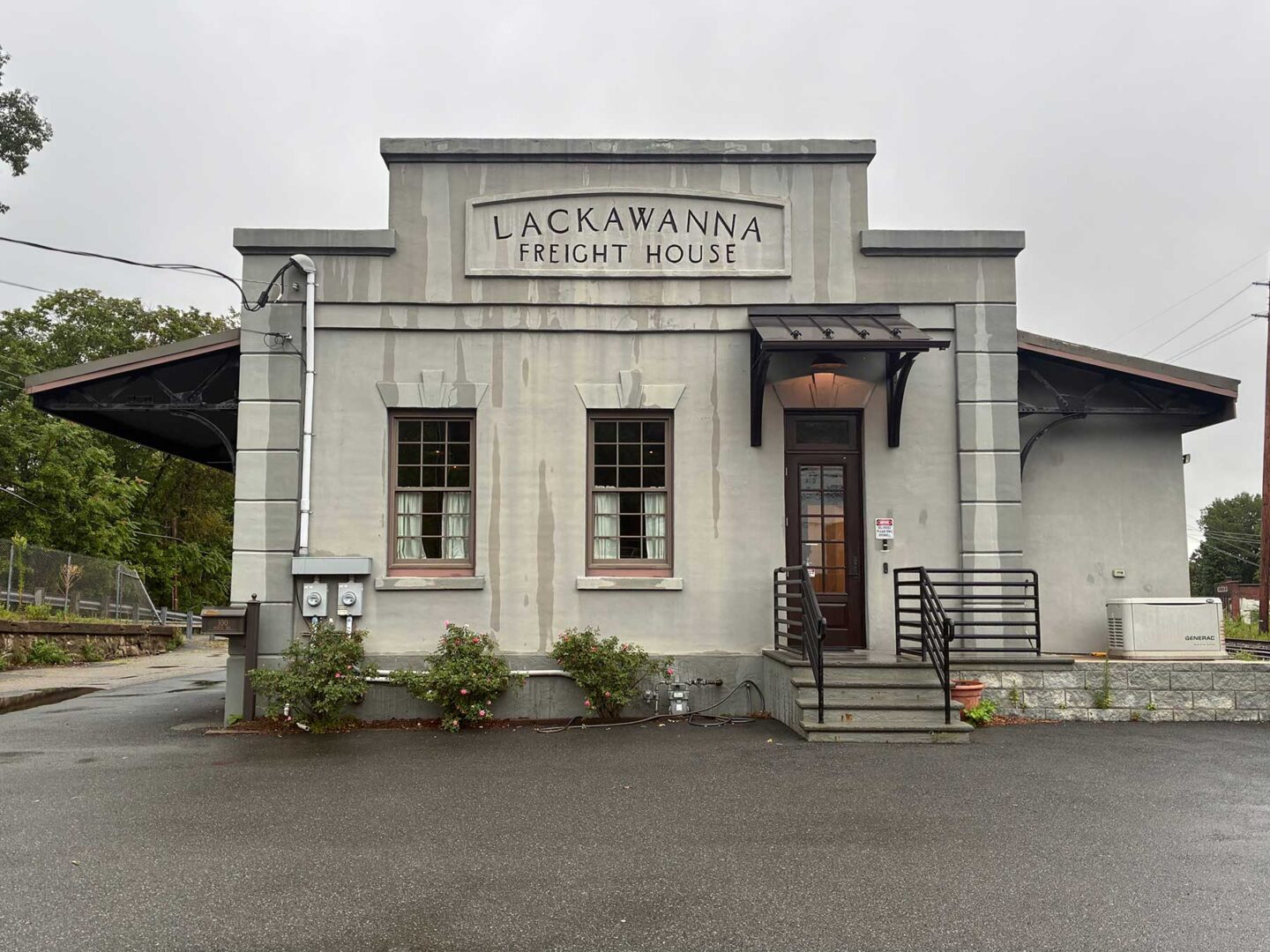
He was only 21 when he penned the history of the Rahway Valley. In a field that seems to draw an older demographic, King, 31, brings youthful energy to the task of preserving the history of a region once criss-crossed with rail lines. He began his career as a train historian a decade ago when he became treasurer, at age 24, of the Tri-state Railway Historical Society. He is also treasurer of the United Railroad Historical Society, which is based in Boonton, headquartered down the street near a former Lackawanna Freight House.
The two organizations often work together and there are even talks about combining the two, which explains why the Tri-State Railway Historical Society chose Boonton for its archive.
“This is the literally closest office to the train yard,” King said.
Leaning against one of the walls is a hand-drawn map showing all the former rail lines that used to cross New Jersey, reminding us of infrastructure that was lost. There have been some victories in restoring some of the lost rail network, including talks of bringing back service between New York Penn Station and Scranton. Historic rail lines have seen a resurgence in interest lately due to the growing popularity of rail trails. The Pompton Valley Rail Trail opened in June and the Essex-Hudson Greenway broke ground last month.
“A lot of the rail fans don’t like the rail trail effort because it’s removing the railroad, but I see it differently — I see it as preserving the corridor,” Kings said. “If ten years down the road we have a need for rail transportation again, the corridor is still there.”
