

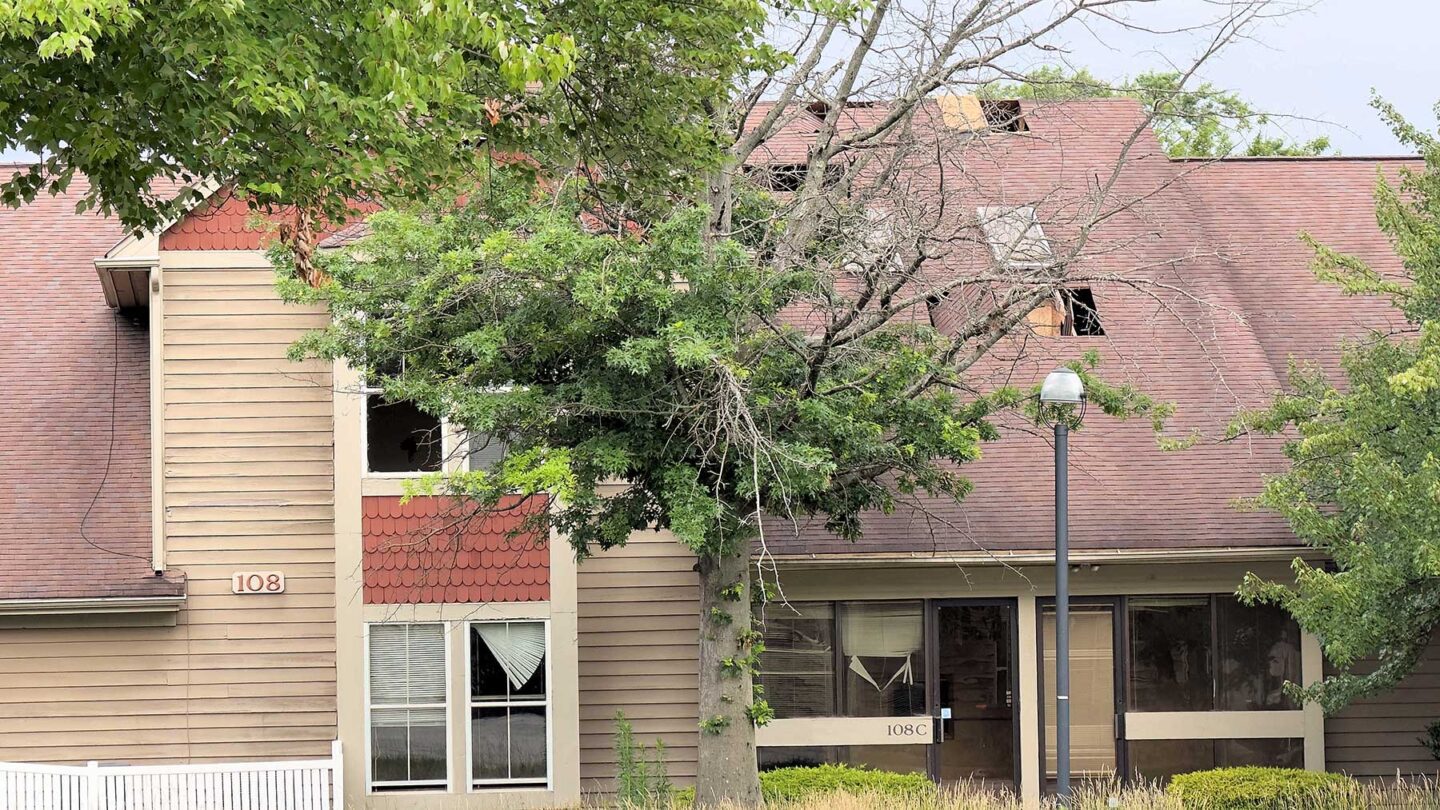
When Lumberton residents attended a town meeting in late May, they learned the details of a planned 857-unit development that would increase the number of housing units in their community by 17%.
Some in the rural Burlington County town were surprised, and others wondered how this D.R. Horton development could be happening and what could be done.
“I understand where a lot of you are coming from,” the Township’s affordable housing lawyer, Michael Herbert, of the South Jersey law firm of Parker McCay, told them.
But he indicated the development plan was a train speeding along the track and could not be derailed: “We’re stuck. We’re under court order. We have to proceed.”
Lumberton had long committed the space to achieve its affordable housing goal. Out of the total 857 units, just 506 would be market-rate units and the balance, about 41%, would meet at least one type of affordable housing commitment.
Many other New Jersey municipalities also felt stuck – or forced or conflicted – in the last two years as they developed their court-ordered plans to set aside a pre-calculated number of units for affordable housing.
Last year marked the 50th anniversary of the landmark Mount Laurel decision in the New Jersey Supreme Court that set the stage for inclusionary housing for lower- and middle-income families, senior citizens and the disabled.
Every municipality has different goals for affordable unit counts, and this fourth round of municipal plans has challenged the imaginations of local officials who scrambled to find open space for development in time for the March deadline. The rounds, requiring a municipal blueprint for affordable housing development, come along every 10 years.
While it may take a lot to muster citizens to attend local planning or zoning board meetings, even fewer of them scrutinize a municipality’s redevelopment plans and affordable housing programs – each of which can throw a light on where local officials plan to add large developments.
As always, some officials maintained they have no room for new development to meet the affordable housing commitment. In other communities, officials set out to find under-utilized properties that could be repurposed into affordable housing.
At issue is the size of some of the residential developments – if 150 affordable units are desired, the whole project could be a 750-unit development with the balance of the units at market rates.
And in conflict with finding developable space are the politically popular local open space programs that acquire farm or other unused acreage to preserve as undeveloped open space forever.
In some plans, massive and empty parking lots at office complexes or shopping centers are targeted as space for affordable housing development. Other office complexes would be demolished and replaced with housing that has affordable housing units.
“A lot of them are doing it in very thoughtful ways,” Jag Davies, communications director of the Cherry Hill-based nonprofit Fair Share Housing Center, told Jersey Digs. “You’re taking a space that is not serving the community well…. You’re not having to pave over green space.”
The Fair Share Housing Center, founded in the year of the Mount Laurel ruling, gets deeply involved in reviewing and commenting on the municipalities’ affordable housing plans that are filed with the court.
Consider the following creative examples, several of which were assembled by Davies:
• Allendale, Bergen County, expanded multifamily zoning on the Allendale Corporate Center to 15.1 acres from the previous 9.8 acres to accommodate 180 units that would include 36 affordable family units. The property is at 90 Boroline Road, off Route 17.
• Evesham, Burlington County, designated the 39-year-old Marlton Crossing Garden Offices, just off Routes 70 and 73, as a site for apartments that include affordable housing. Demolition has begun, and the apartments will take about three years to build. Neighbors objected to the project, which includes 325 market-rate and affordable apartments, but the Planning Board unanimously approved it.
• Roseland, Essex County, ruled that a major corporate campus area on Becker Farm Road off Route 280 is an area in need of redevelopment. At one building site, 42 out of 265 homes will be affordable, and another site will set aside 65 out of 325 units as affordable.
• Secaucus, Hudson County, agreed to support 2,500 units, with 500 affordable, at the Frank Lautenberg Train Station.
• East Brunswick’s plan includes the Brunswick Square Mall, which would be redeveloped and add 60 new affordable family homes to the community. Other malls, such as Moorestown Mall in Burlington County, have added affordable housing to residential developments in the parking lots.
• Mount Laurel, Burlington County, has slated several hotels and motels with high vacancy rates as areas of redevelopment with the notion of converting the properties to residential with affordable housing components.
• Madison, Morris County, plans to redevelop surplus Drew University land on the school’s campus with 305 residences, and 46 affordable.
• Cherry Hill, Camden County, has included an underutilized large office building in its affordable plan. The 50-year-old Three Executive Campus off Route 70 could include an infill development on the grounds with 195 units, 39 of which would be affordable. Another scenario suggests reusing the office building and building 320 housing units, including 64 affordable.
• Parsippany-Troy Hills, Morris County, has a redevelopment plan for an abandoned corporate warehouse site off Route 80 that calls for 1,570 residential units, and 314 affordable.
• Wayne, Passaic County, has targeted a former Toys R Us site for redevelopment into 1,300 housing units, with 272 affordable.
Municipalities do not produce affordable housing but change the zoning laws to accommodate developers’ plans for apartments or houses with affordable components, Davies explained.
Cities and towns also get bonus credits if their affordable housing sites are transit-oriented. Cherry Hill, Mahwah, Metuchen, Old Bridge and Somerville have plans for affordable housing next to or near transit stops, according to Davies.
