

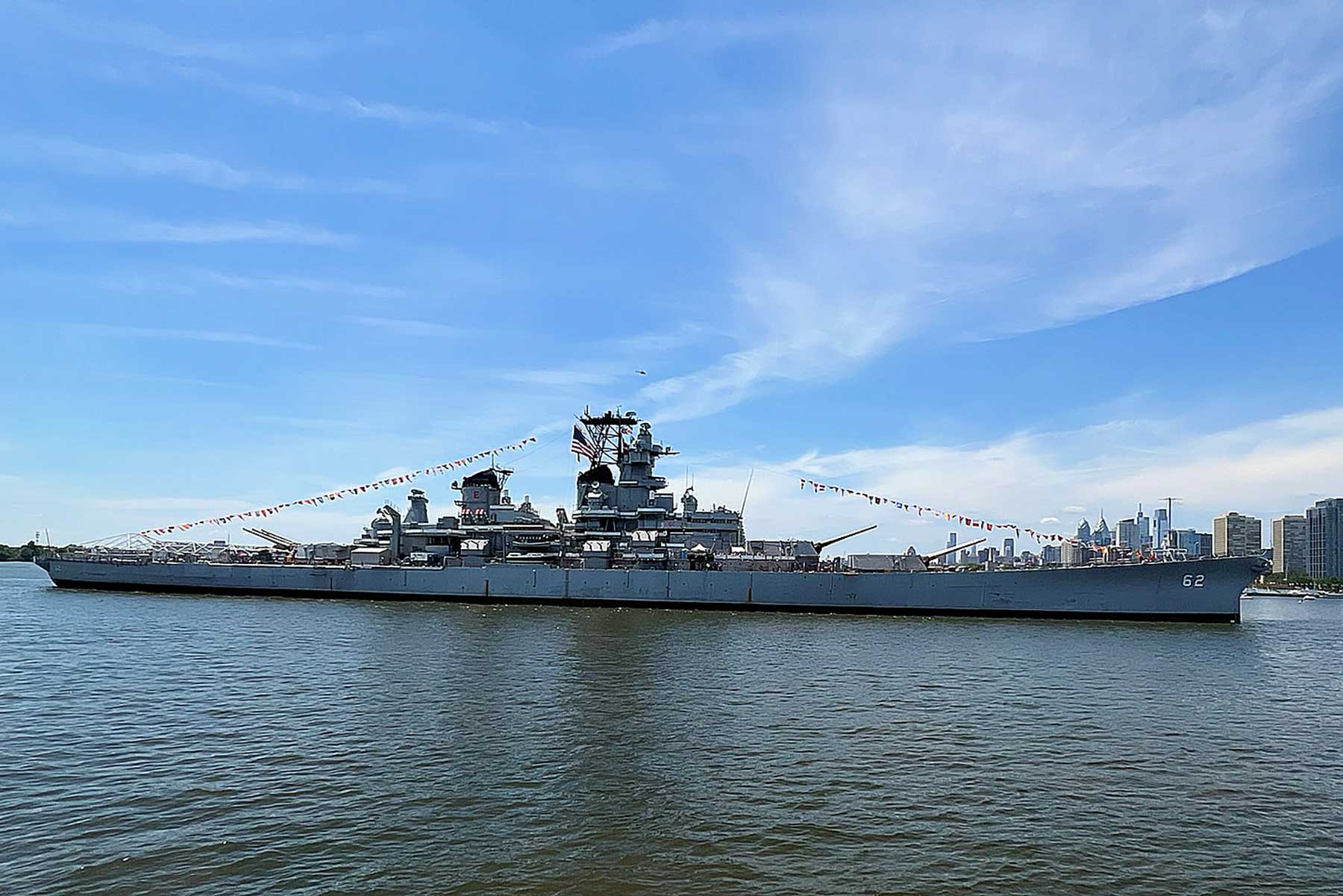
Speaking in front of huge 16-inch guns on the Battleship New Jersey’s foredeck, state Economic Development Authority CEO Evan Weiss described the EDA’s special program to fund the expansion of cultural venues.
When the Cultural Arts Facilities Expansion (CAFÉ) program evaluates projects, the EDA consultants and staff look at industry standards for investing in theaters, libraries or performing arts centers depending on the proposed project.
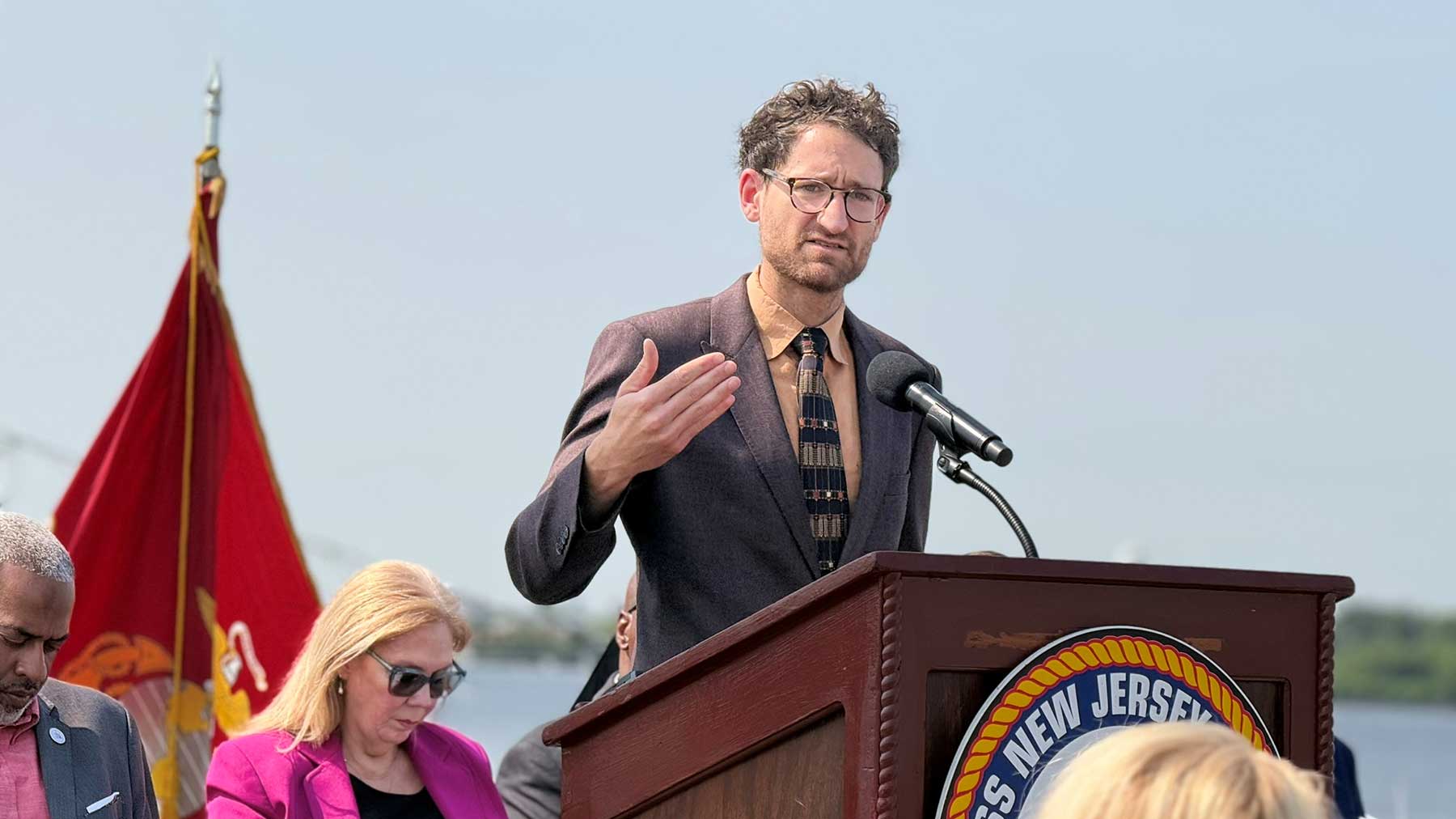
“So, we get to the battleship,” Weiss said in Camden on the Delaware River waterfront on August 12 as elected officials and battleship supporters in the audience chuckled.
“Is there any other project like this? We called down our consultants, our staff, and it’s like ‘Can you find us a battleship comparison?’ And there isn’t one. I think that is part of the message: This is such a unique and special project. There’s literally nothing like it as far as we can tell in America, especially about what this is going to become,” Weiss added.
Weiss was on the ship to announce that the CAFÉ program would fund the bulk of a $24.25-million redevelopment project praised as “transformational” for the museum and memorial, and the largest investment since the battleship was first berthed in Camden in 2001.
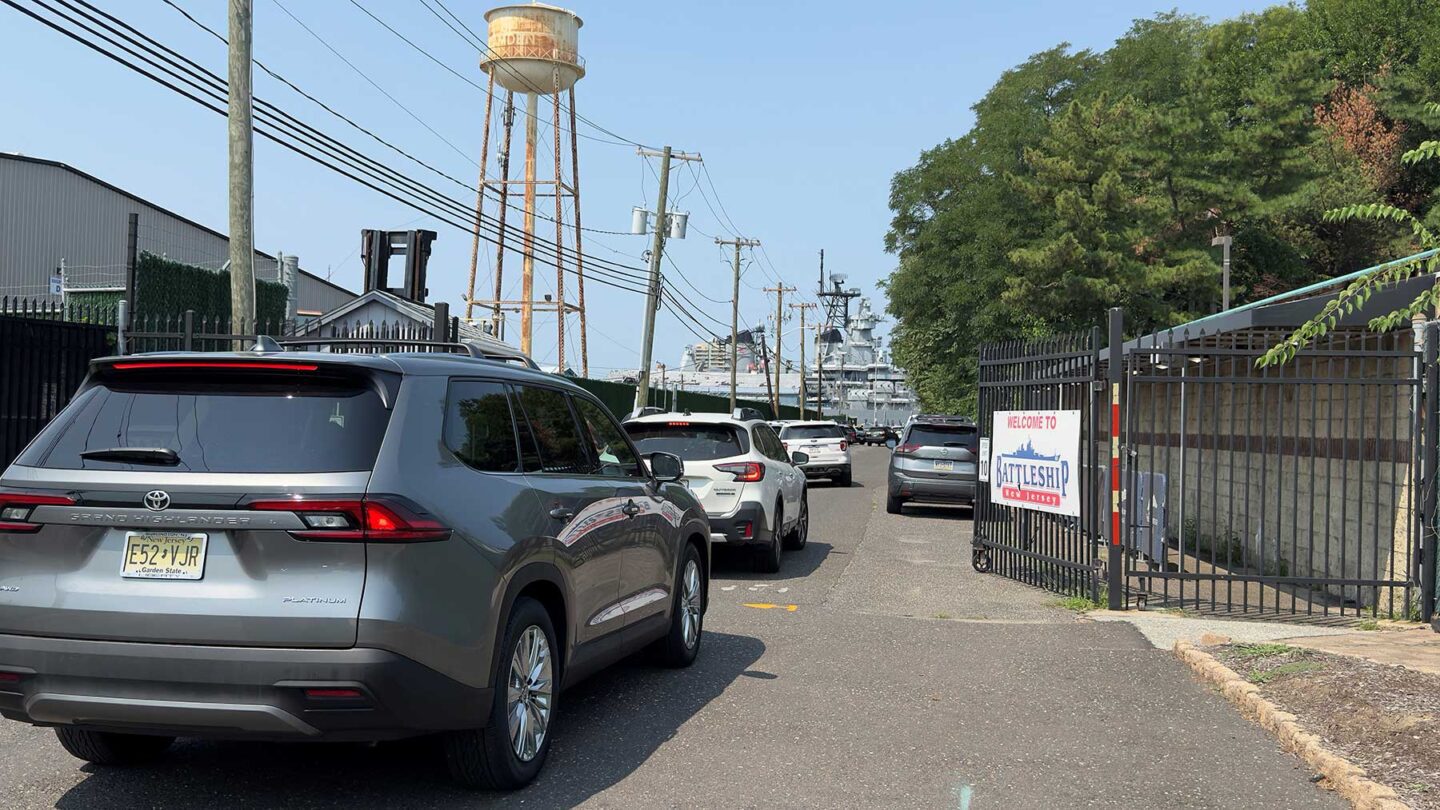
The battleship, today with a makeshift entrance from the street and a nondescript gift-and-snack shop, will get a $9.5-million, three-story, glass-walled visitors’ center and a $5.5-million parking structure as part of the project.
“Our guests should not have to search for the front door to one of our nation’s most historic landmarks,” Battleship New Jersey CEO Marshall Spevak said at the announcement.
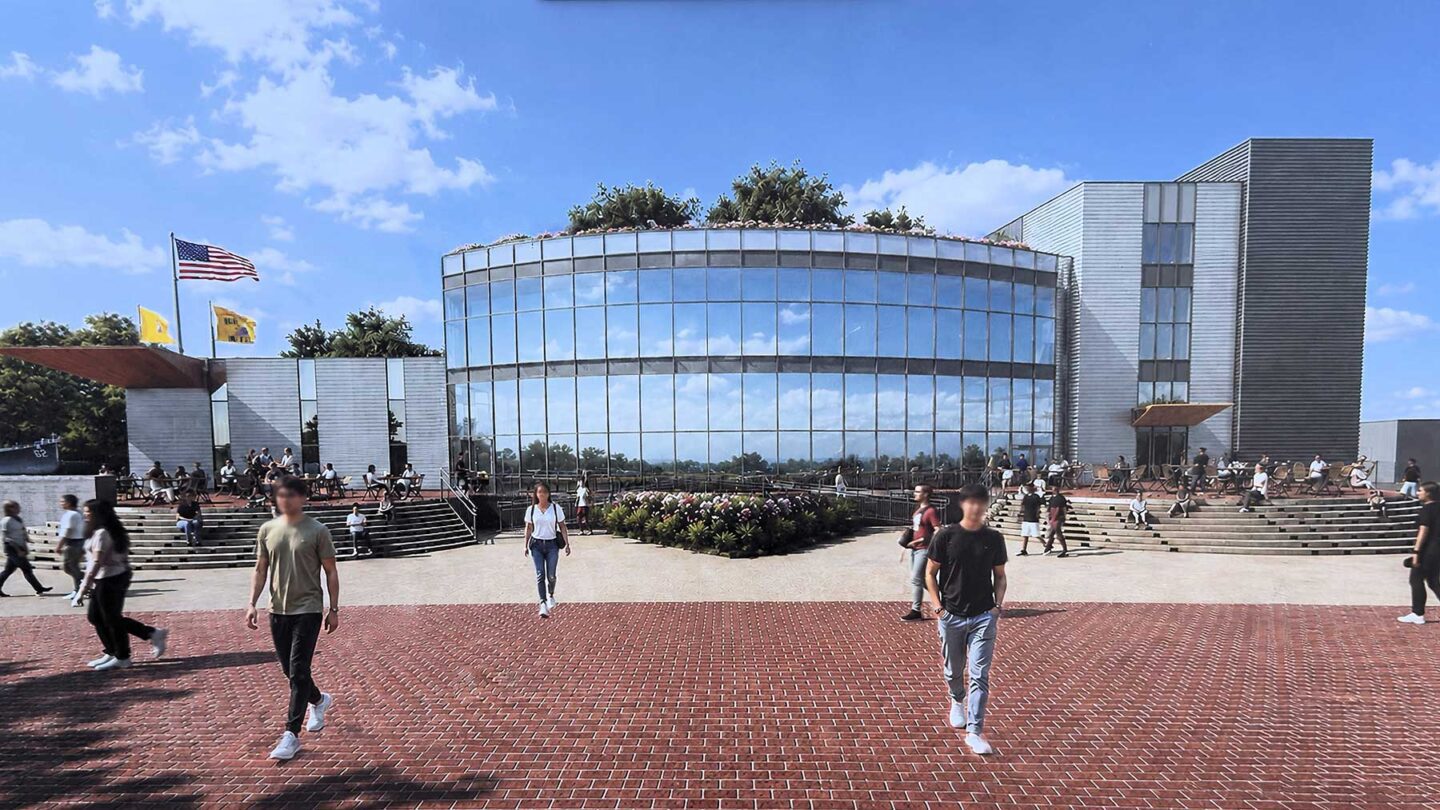
The 8,700-square-foot center will feature a commercial café, exhibit space, a screening room to get visitors started with an instructional video, and a roof terrace overlooking the battleship, the river, and Philadelphia, Spevak told Jersey Digs in an interview.
Space in the center will be rented to businesses and organizations to add to the nonprofit’s revenue, he said. Spevak also envisions diners who aren’t necessarily ship visitors simply stopping at the center for a meal on the roof deck or in the café.
Without the CAFÉ program, the expansion project would be unthinkable.
“We would simply never be able to afford to do something of this magnitude, this scale, if not for this program,” he said.
Parking also will be improved.
Limited parking is available near the ship today, but on busy days the overflow is sent to a city-owned lot that requires a walk down the entrance road, which looks like it’s being used for construction.
A two-story parking garage will be built at Wiggins Marina on the waterfront, and a pedestrian corridor from the garage to the visitors center will be designed and “beautified,” Spevak explained.
The visitors center also will permit battleship staff to better organize the school groups that visit. Today, the children are dropped at the main gate, and multiple school groups often intermingle. “There are just kids everywhere,” Spevak said.
A record 15,000 students toured the ship last year. The ship hosts about 80,000 visitors each year.
About $6 million of the funding is earmarked for improvements to the battleship itself, including the replacement of the ship’s HVAC chillers and cooling towers, which date to its 1943 commissioning. The U.S. Army Corps of Engineers will also dredge the river beneath the ship for the first time since it moved to Camden.
The ship’s fantail is now the primary space for special events, including corporate meetings. However, the three tents on the fantail must be removed from December through April because of state regulations. Spevak said an all-weather, all-year facility for the fantail will be designed. Depending on costs, Spevak said the fantail meeting space could be cooled and heated.
While renovations will preserve the battleship’s original condition, there is one project for which Spevak is eager to forgo adherence to historical detail.
The men’s and women’s heads at the fantail today give visitors a chance to use an outdated World War II-era bathroom.
That experience must end, Spevak said. Visitors should be able to use bathrooms that meet current standards, including an ADA-compliant facility, he said.
