

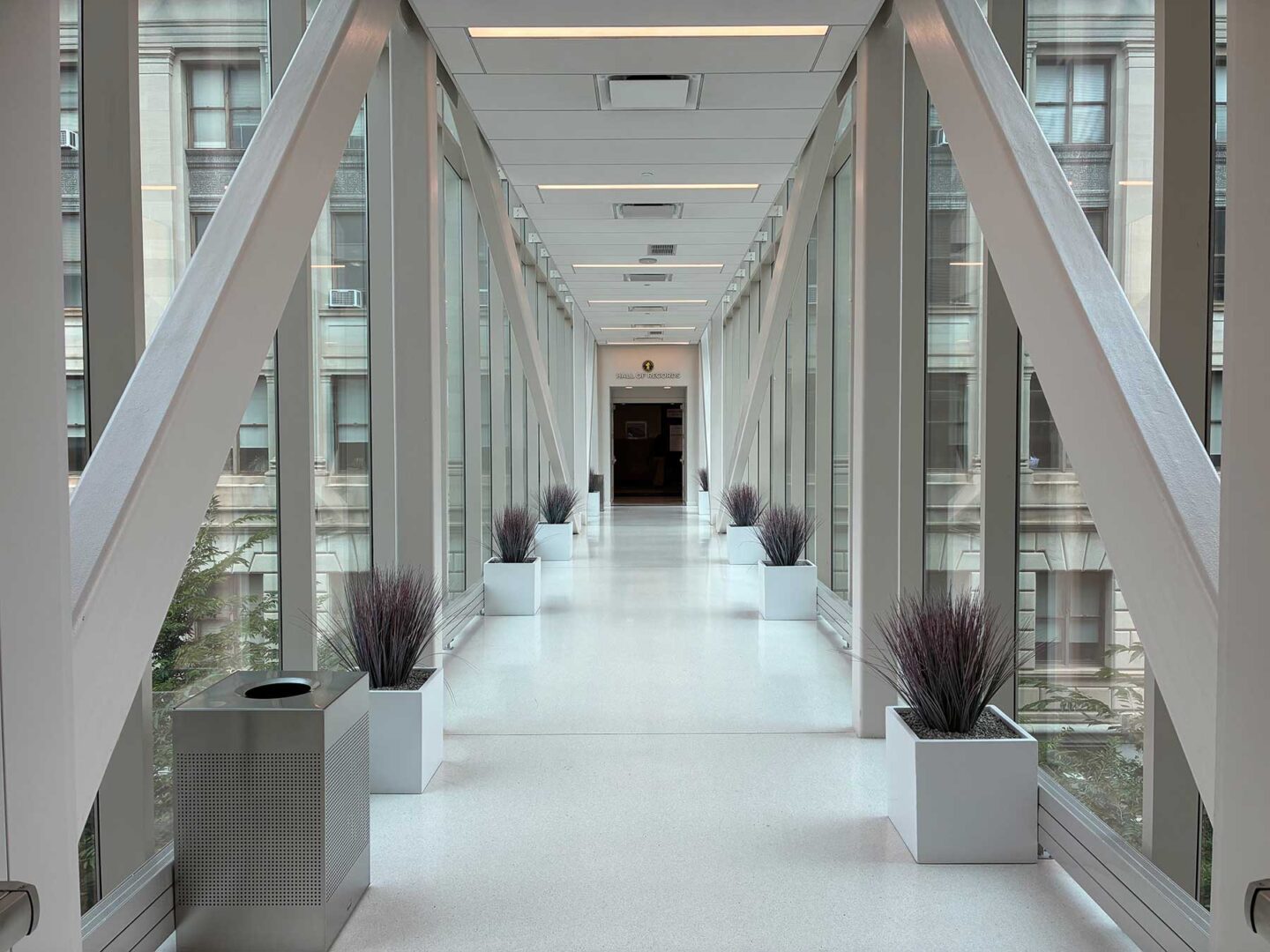
Skybridges are having a resurgence in architecture. Once reserved for large cities like Newark and Minneapolis, developers are now proposing them in unexpected places across New Jersey, like a historic district in Orange, small towns like Somerville, and growing downtowns like New Brunswick.
But this time around, the above-ground pedestrian infrastructure is different from its midcentury counterparts in that they are intended to solve logistical problems.
In the Valley Historic District in Orange, new neighboring developments are proposing skybridges to help circumvent the Department of Environmental Protection’s strict regulations on flood zones. At the Nassau Commons, the building’s entrance can sometimes see three feet of floodwaters. In the event of a major storm, the developer, Vida Capital, had to ensure that residents could exit the building above the floodplain. So they devised a skybridge that allows tenants to cross to the next building and exit safely.
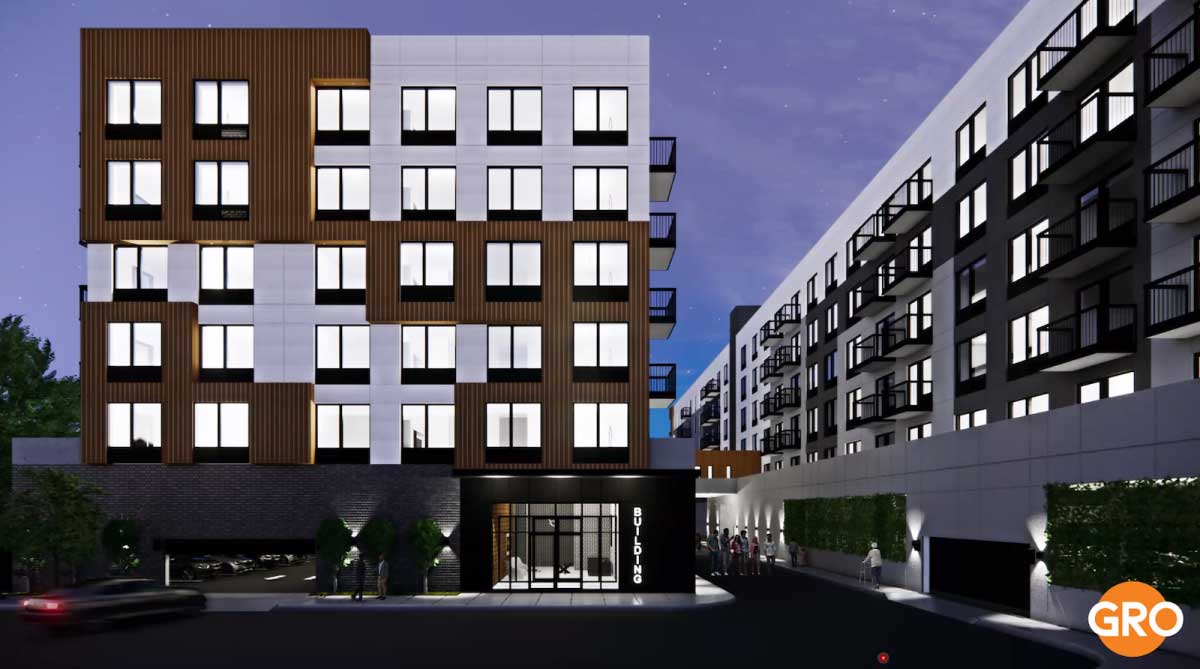
“Without this bridge, we would not be able to propose any sort of development due to the fact that this entire property and everything adjacent to it is in a flood zone,” said project engineer Soufiane El Moussi, an associate at Inglese Architecture + Engineering, who worked on the Nassau Commons project, told the Planning Board last year.
The oldest-known skybridge still standing is the 16th-century Vasari Corridor in Florence, which allowed nobles to pass between palaces without experiencing the horror of rubbing shoulders with commoners. The impression of skybridges hasn’t changed much over the years because of how they were used during the Robert Moses era. They became more common as new construction techniques emerged, and in the midcentury we began to see more of them, reflecting new attitudes toward urbanism that viewed urban centers as workplaces for suburban commuters.
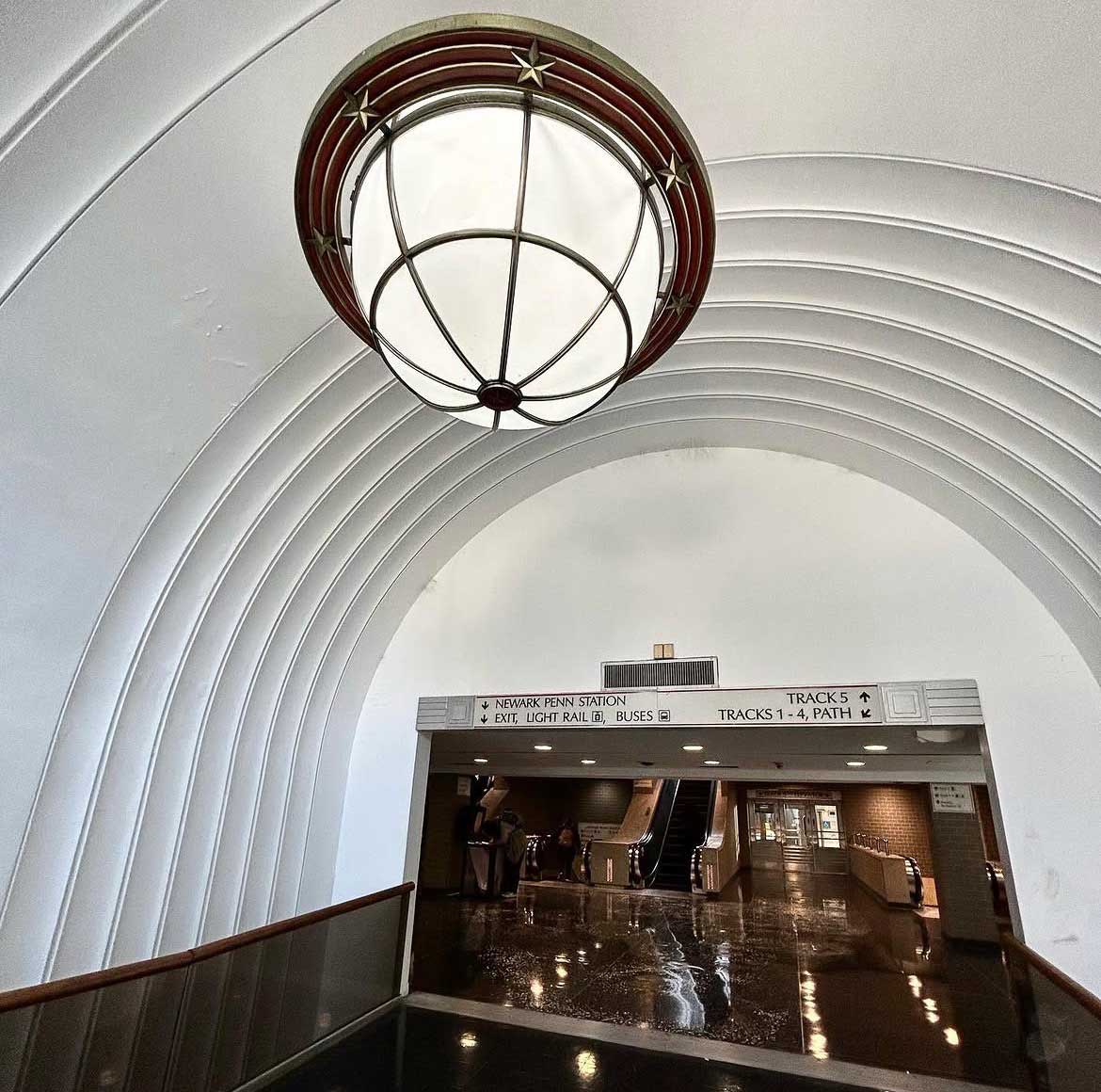
In Newark, the first skybridge was completed in 1972 at Penn Station, connecting it to the Gateway complex. On the day it opened, one of the developers behind the Gateway project, Norman Kranzdorf, indicated that the new project likely wouldn’t have gone ahead if the city government hadn’t built the pedestrian bridge connecting the Gateway complex to Penn Station.
“It was the city’s promise that this bridge would be built, which contributed strongly to our decision to go ahead with the development of this great commercial center,” Kranzdorf said at the ribbon-cutting ceremony.
But with that skybridge came controversy over its impact on the city’s streetscape.
Historian Charles Cummings once described Newark’s skybridges as a manifestation of suburbanites’ fears about coming to Newark after the riots. It allowed commuters to “stay in their glass towers and never mingle with the people,” Cummings wrote in one of his columns, “Knowing Newark,” that appeared in The Star-Ledger. Newark’s skybridge, in some ways, embodied an “elitism,” Cummings said, perhaps not unlike the Vasari Corridor, where the suburban workforce never had to mix with everyday Newarkers.
The skybridges we are seeing today are of a decidedly different sort. They are being built to overcome logistical challenges like floodplains or, in the case of the Edge on Main, to allow Edgewood Properties to share a liquor license between two buildings.
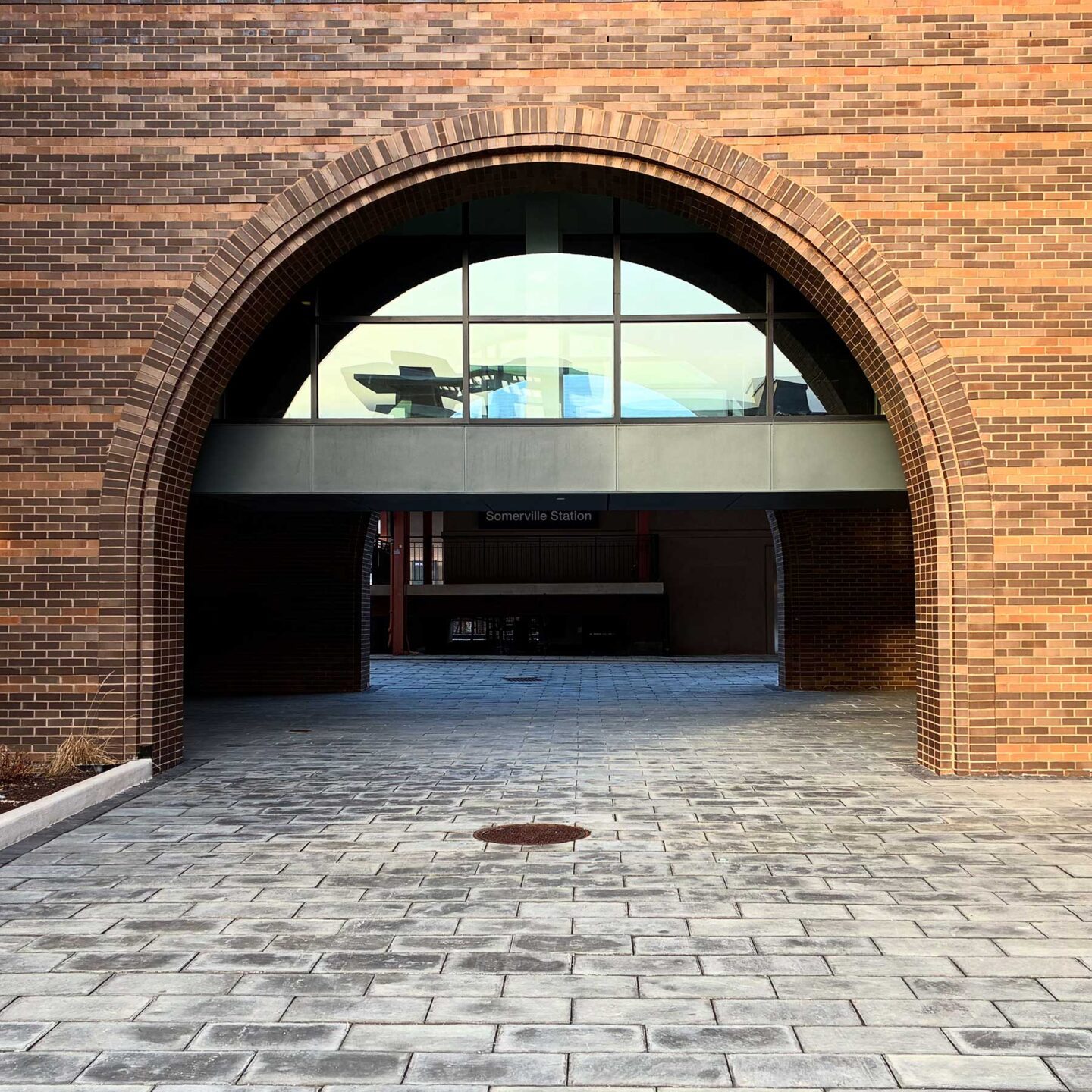
In 2021, Somerville’s Planning Board approved two pedestrian bridges for Edgewood Properties, one that spans Davenport Street. But it solved an interesting dilemma about how to obtain a liquor license for both buildings when such licenses are scarce.
“Once the two buildings were connected, then the developer could share the liquor license between two restaurants,” said Devin Healey, Somerville resident and the founder of Engage Social Media Solution. “Somerville is so small that there aren’t many liquor licenses available — it’s a pretty genius move.”
