
Over the last decade, hundreds of aging subsidized apartments have been replaced or rehabbed across the city of Camden, including the $300 million massive public-housing building program now underway in the city’s Cramer Hill section.
But city leaders have contended over the last few years that Camden’s residential renaissance has been missing an essential element – new market-rate residences for sale and rent.
“You start thinking about all of the game-changing advances in this city that continue,” said Nicholas J. Cangelosi, regional vice president of development for Camden-based The Michaels Organization. The next move, he added, is market-rate housing.
Cangelosi’s firm, a national builder of rental communities and the developer in the Cramer Hill transformation, has three smaller market-rate housing projects in the works near the city’s downtown section and expects more in the future.
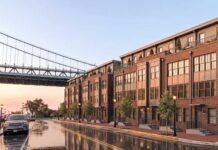
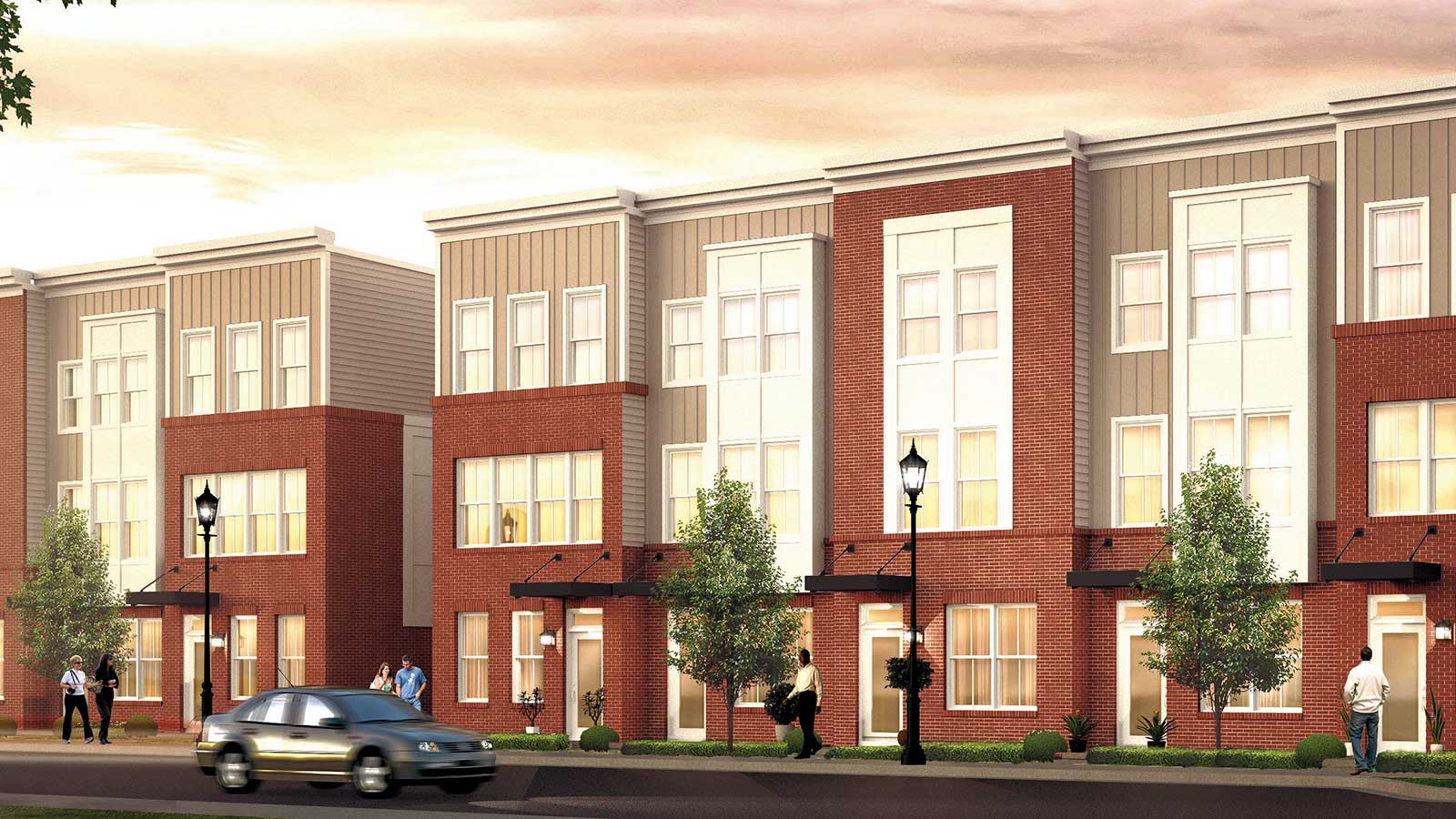
One of those projects calls for 18 market-rate townhouses for sale near the waterfront. Cangelosi called the project “part of a larger vision.”
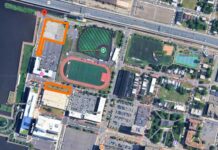
Its developer, Camden Transformation Partners LLC, is partly owned by Democratic power broker and Camden commercial developer George E. Norcross III. The project includes 1,534-square-foot, three-story homes on vacant land near the Rutgers campus.
More market-rate townhouses and apartments are expected to fill empty acres and unused parking lots in the downtown section of the city. The purchase price for owned homes is expected to be in the high-$400,000 range or higher.
Market-rate rentals are also needed. For example, Michaels’ 11 Cooper, a 156-unit apartment complex near the waterfront, has a long waiting list for tenants, Cangelosi said.
Cangelosi and others say a leading attraction for homeowners and market-rate renters is the plunge in crime in Camden – a city once branded as one of the most violent in the nation.
The city’s number of murder cases continued to drop in 2025, reaching just 12, a 29% decline from the 17 cases in 2024, according to Camden County Police Department statistics. That total is far from the record 67 murder cases in 2012 and was the lowest number since 1985.
“What has changed over the past decade is the safety factor,” Camden County Commissioner Jeffrey L. Nash told Jersey Digs. “Streets in Camden are relatively safe.”
Nash is also the chief executive officer of Rowan University and the Rutgers University – Camden Board of Governors, a panel that works with the colleges and local government to promote development in Camden’s downtown area.
“We expect that there is room for well over 1,000 units (of market-rate housing) in the downtown community alone based upon the explosion of business activity in the city, the expansion of Cooper Hospital, and the creation of the Beacon tower,” he said. The Beacon is a planned 25-story office tower that will dominate all others downtown and will be located next to the Walter Rand Transportation Center after its $250-million, state-funded rebuilding.
Nash estimated that of the 1,000 units, about half would be owned.
Besides open parcels, including acreage where the Riverfront State Prison once stood next to the Delaware River and Ben Franklin Bridge, the county expects to demolish the Radio Lofts former RCA manufacturing building and, once a regional jail is established out of Camden, to tear down the Camden County jail, which sits on prime downtown land.
In December, the New Jersey Economic Development Authority took concept ideas from developers for the former Riverfront Prison acreage next to the bridge. The EDA has not disclosed the ideas, but some say mixed-use developments with water views of Center City Philadelphia across the Delaware River are likely.
“We want people to buy the property, to own the property, and to live in the property. That stabilizes the community,” Nash said of homeownership, noting that one target is the more than 20,000 commuters who each day come in from the suburbs to work at headquarters such as Campbell’s and Subaru and then turn around and go home.
Stephen Danley, a Rutgers-Camden associate professor and director of the Center for Urban Research and Education, moved to Camden in 2013 and purchased his home near the Rutgers campus in the downtown area during the pandemic.
“I think the biggest thing that it says is the region is starting to figure out what Camden residents already know,” Danley said of the rising interest in market-rate housing. “Folks are realizing Camden is a pretty good deal.”
Danley said he walks to his job on campus, hosts university social functions at his home, and he and his wife are “on PATCO all the time.” The PATCO Speedline, with stops in Camden, allows a Camden resident to reach Center City Philadelphia after a quick run over the Ben Franklin Bridge.
“We’re welcoming new homeowners within our community and to our community,” Camden Mayor Victor Carstarphen told Jersey Digs.
“I’ve had a lot of folks in the community looking to stay and upgrade from where their home is in the city,” the mayor said, but the problem has been the availability of market-rate homes for sale across the city.
Camden’s population has shrunk dramatically since its peak of 124,555 in 1950, falling to 71,496 in 2024, according to Census Bureau statistics.
In 1950, the downtown and waterfront areas were dominated by industry, led by manufacturers Campbell’s Soup and RCA Victor. Today, the waterfront near downtown is home to new corporate headquarters, such as New Jersey American Water, and attractions, including the Adventure Aquarium and the Freedom Mortgage Pavilion concert venue.
Because of the population decline, gentrification is not an issue with the rise of market-rate housing, Nash said.
“There’s room for everyone to live in the city,” he said.
Bridget Phifer, CEO of Parkside Business & Community in Partnership, for years has led her nonprofit in rehabbing or building new homes for ownership in the Parkside neighborhood.
“I certainly believe there is a need for a full spectrum of housing opportunities in the city,” she said. In Parkside, the nonprofit’s subsidized homebuilding program sells homes to income-eligible buyers for less than market rates. She said it may be a while before market-rate housing becomes widely available in the Parkside neighborhood.
But any new housing should not displace residents and possibly also carve out some of the properties as affordable housing, she said. “I think there is a way to be thoughtful about it,” she added.
Noted developer Cangelosi: “It’s really not the same Camden that people think of 20 years ago. It really is radically improving.”